
MiniMax M3.1 Flash is worth testing for supervised data analysis and tool-based work. Its low API rates and strong published results make it a credible candidate. They do not establish that it will finish your coding task faster or need less review. This review separates vendor claims, independent tests and community reports. It does not claim an author-run performance benchmark.
The useful tension is specific. Plotly's released-model test improved from 38/43 correct answers for Space Bunny Alpha to 41/43 for M3.1 Flash, while median time per question rose from 36 seconds to 3 minutes. That trade-off, rather than a launch ranking, determines the recommendation below. Tabbit Browser enters the discussion as a place to organize a browser workflow, with an explicit availability check before any model-specific test.
What MiniMax M3.1 Flash actually is
MiniMax launched the general release on October 19, 2026. The API identifier is MiniMax-M3.1-Flash. The model documentation describes a multimodal coding model with a 1,000,000-token context window. The release, September Preview and anonymous Space Bunny builds must be distinguished when comparing results. Our MiniMax M3 overview covers the earlier family member.
According to the invocation guide, thinking is mandatory. There are five effort levels: low, medium, high, xhigh and max. Omission selects max. Requests that disable thinking or use none return a 400 error. Use the effort field appropriate to your protocol; a familiar client interface does not guarantee identical settings reach the server.
Key takeaways
Evaluate elapsed time and total cost per accepted task alongside token throughput.
Plotly's 41/43 result supports a supervised analytics trial, with a substantial waiting-time trade-off.
Low token rates do not remove the cost of reasoning, retries and verification.
Preview praise and Space Bunny complaints need version labels.
Confirm the exact model in your account before following a model-specific Tabbit workflow.
The deciding number is 3 minutes, despite fast output
In its October 20 analytics report, Plotly reports a median of 3 minutes per question for the released model, versus 36 seconds for Space Bunny Alpha. The score improved by three answers on a 43-question exam. Five times the waiting time can be reasonable for background analysis; it is a material penalty for an interactive assistant.
The report attributes the longer run to more model calls and more generated text. Calls per question rose from 15 to 45, while output grew from about 8,500 to 32,000 tokens. The full exam, repriced at MiniMax list rates, rose from $0.82 to $4.09. These are one evaluator's results on its analytics agent, not a general latency guarantee or a comparison against MiniMax M3.
That is why a high tokens-per-second figure cannot settle this review. A rough accounting is:
Task time = model generation + tool execution + waiting + retries
Task cost = all input + cached input + all billable output + tools
Accepted-task cost = total spend / outputs that pass your checks
Keep the denominator visible. A cheap failed run still consumes time and money. The agentic browser guide explains why model choice and browser execution are separate parts of the workflow.
M3.1 Flash at a glance
| Item | Verified information | Decision consequence |
|---|---|---|
| Model | MiniMax-M3.1-Flash, general release | Record the exact identifier |
| Context | 1,000,000 tokens | Capacity does not prove recall accuracy |
| Thinking | Always on; five effort levels; default max | Set effort explicitly |
| API rates per million tokens | $0.15 input; $0.60 output; $0.015 cached input | Count reasoning and cache misses |
| Plotly analytics | 41/43 correct; median 3 minutes per question | Suitable for testing background analysis |
| Open weights | Launch post says they will follow | Verify files and license before deployment |
Specifications come from the invocation guide and official pricing, checked October 21. The launch post describes weights as a later release. A future release announcement is not a downloadable checkpoint.
Practical evidence before the benchmark table
Plotly's exam uses a synthetic wind-energy warehouse and a private answer key. The released model found all five hidden patterns, but missed two questions overall. One failure was particularly instructive: its explanation described dividing a seven-day sum by seven, while the SQL omitted that division. A convincing narrative did not make the calculation correct.
This is useful practitioner evidence because it identifies both an output and a concrete failure. It remains a short-horizon analytics test. It does not establish performance on a large repository, an unattended business process or your own database. Re-run the relevant query and inspect the result instead of accepting the model's description of its work.
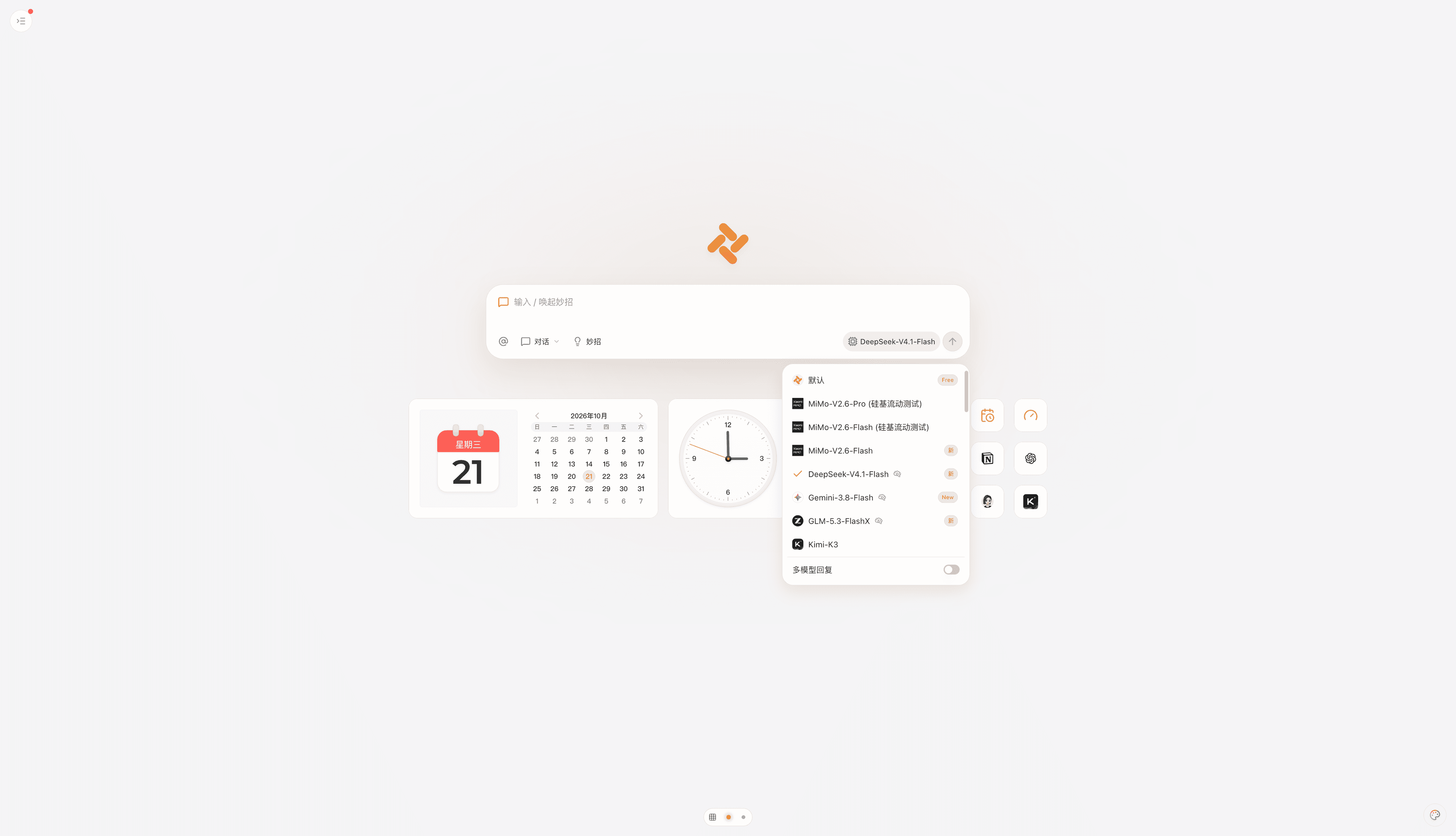
The local Tabbit check for this article was narrower. On October 21, the available test account's chat picker listed MiniMax-M3 and Friday-MiniMax-M3, but not M3.1 Flash. No M3.1 Flash task was submitted. The screenshot records this access check, not a failed model benchmark. It does not establish availability in other accounts or regions.
Vendor benchmarks, and how much to trust them
| Benchmark | MiniMax's reported M3.1 Flash result | What it can help assess |
|---|---|---|
| DeepSWE v1.1 | 73.7% | Software engineering with tests |
| OSWorld V2 | 61.7 | Computer operation across applications |
| Agents' Last Exam | 29.6 | Professional tasks with economic value |
| BankerToolBench | 76.2 | Multi-step financial tool use |
| CyberGym | 82% in launch prose | Vulnerability discovery and validation |
These are vendor-reported results from the launch article, not tests reproduced here. The prose rounds CyberGym to 82%; do not treat different displayed precision as independent evidence. The table does not provide a complete replication package, uncertainty intervals or a controlled comparison of every client and effort level. These scores support a trial, not a blanket replacement decision.
For independent analytics comparison, Plotly reports 41/43 for M3.1 Flash, Claude Opus 5.5, Gemini 4 Argon and GPT-6 Sol, versus 38/43 for GLM 5.3 Flash and Qwen 3.8 27B. A tie on 43 questions cannot establish general equivalence. For other candidate families, start with the DeepSeek V4.1 Flash overview and GLM Flash background, then verify their current endpoints and run the same task set.
Three strengths worth testing
Background analytics with inspectable calculations
Plotly's hidden-pattern result is a reason to test the released model on analysis that can run while you do other work. The useful output is an inspectable query and result table. An analyst who can validate the computation may accept a longer wait for better coverage. Someone who needs an immediate answer may reach a different decision from the same evidence.
Low rates for repeated tool context
At the published rates, a hypothetical run with 200,000 uncached input tokens and 20,000 billable output tokens costs $0.042 before tools and other charges. That is arithmetic, not a measured task price. If the same run generates 100,000 output tokens, its token cost becomes $0.09. Reasoning depth and retries can change the bill even when the visible answer is short.
Cached input is priced separately. Confirm actual cache hits in usage records rather than applying the cached rate to every repeated prompt. MiniMax's claim of a 70% overall agent-task cost reduction is different from a universal discount on every workload or subscription.
Adjustable effort inside an existing integration
The invocation guide documents Anthropic-compatible and OpenAI-compatible request formats. That gives developers a practical evaluation path without rebuilding the surrounding application. Start by checking that your client sends output_config.effort or reasoning_effort correctly, and retains tool results between turns. Then compare a lower effort setting against max on the same acceptance criteria. Lower effort is a hypothesis to test, not a promise of equal quality.
Three limitations that change the recommendation
Reasoning cannot be switched off
A request that needs only a short extraction still uses an adaptive-thinking model. Lower effort can reduce reasoning, but it is not a non-thinking mode. Log the final result, total usage, elapsed time and tool calls. Token speed alone can hide an unhelpfully long interaction. The Gemini 3.8 Flash review provides another workflow-based comparison framework, rather than a direct performance ranking for this model.
Correct explanations can accompany wrong work
The missing division in Plotly's SQL is more actionable than an unsourced claim that the model is unreliable. Check generated formulas and code directly. For extraction, verify a fixed sample against source text. For code, require a failing test before a fix and a passing test after it. A reviewer is still part of the cost of an accepted task.
Version and access differences complicate early reports
Preview subscribers, users of anonymous free endpoints and general-release API users may have seen different builds and tools. Weights availability also needs a separate check. Do not infer a deployment license from an API listing. Likewise, a model page on a website cannot prove that a specific Tabbit account can select the model today.
Community voices: useful evidence, with version limits
Positive preview experience and a defense of benchmarks
Sovairon, October 19, said their MiniMax subscription experience favored Flash over GLM Flash. In a follow-up, they explicitly identified MiniMax's 3.1 Flash Preview. The workload and scoring method were not disclosed. This supports a subjective preference for the Preview, not a measured general-release win.

ApprehensiveDelay238, October 19, defended benchmarks as imperfect but useful measures of agent performance. That is a methodological argument, not a report of a completed task. It is a useful counterpoint to dismissing every published score after one disappointing session.

Reasoning loops and an opposing preference
Pepek91, October 20, reported repetitive reasoning during medium-complexity changes and switching to DeepSeek. Their exact endpoint, effort configuration and repository were not supplied. Treat the post as a failure mode to include in your trial, not a failure-rate estimate.

RepulsiveRaisin7, October 19, preferred GLM Flash and questioned the benchmark narrative. No task log accompanied the comment. It conflicts with Sovairon's preference, which is precisely why these reports cannot be combined into a winner count.

The practical judgment is to test for loops, distinguish versions and retain benchmarks as one source of evidence. None of these posts establishes your future success rate.
The verdict depends on the workload
| Your workload | Recommendation | Acceptance check |
|---|---|---|
| Background analytics with review | Shortlist M3.1 Flash | Re-run SQL and validate units and aggregates |
| Interactive extraction or quick answers | Compare effort levels before switching | Measure elapsed time and correct outputs |
| Difficult repository changes | Keep your current model as the control | Use identical issues, tests and tool permissions |
| Unattended external actions | Do not approve from these scores alone | Verify recovery and action boundaries first |
| Self-hosting required today | Confirm actual weights and license | API access does not meet this requirement |
| Browser research in Tabbit | Check the picker before testing | An M3 option is not M3.1 Flash |
For a reviewed background task, the accuracy improvement may justify the wait. For rapid exchanges, the reported three-minute median is a reason to measure carefully before migrating. There is no evidence here to recommend replacing every coding model or removing human verification.
Put the workflow into Tabbit, after checking access
Tabbit can organize the source pages and conversation used to evaluate a browser task. Its product explanation and usage practices cover that workflow. This does not establish that Tabbit exposes MiniMax's API effort controls or includes the model in every plan.
The observed test account did not offer M3.1 Flash, so this article cannot supply an in-Tabbit model result. Use the M3.1 Flash resource page for sourced configuration material, then confirm the exact display name in your own picker. If it is absent, use an officially supported MiniMax client for the model trial. Do not substitute M3 and label the output M3.1 Flash.
A useful trial task is to open the launch article and invocation guide, extract the rates and effort defaults into a source-linked table, and distinguish confirmed facts from unknowns. Check every cell against the original page. Record the account region, client version, displayed model, tool indicators, prompt and screenshot. This is a proposed test, not an experiment completed for this review.
Start with one controlled task and your current model as a reference. The CTA below downloads Tabbit for the browser workflow; it does not guarantee M3.1 Flash access or free API usage.
 Tabbit Browser

FAQ
What is MiniMax M3.1 Flash?
It is MiniMax's general-release coding and agent model, launched on October 19, 2026. The API identifier is MiniMax-M3.1-Flash, and the documentation lists a 1,000,000-token context window.
Can you turn off its reasoning?
No. The official guide supports five effort levels and defaults to max when omitted. Requests that disable thinking or specify none return a 400 error.
What does the API cost?
The listed rates are $0.15 for input, $0.60 for output and $0.015 for cached input per million tokens, checked October 21. Actual task cost depends on usage, reasoning, cache hits, tools and retries.
Is it faster and more accurate than Space Bunny?
Plotly's analytics test improved from 38/43 to 41/43 correct answers. Median time per question increased from 36 seconds to 3 minutes, so that test does not support a faster-task claim.
Are the weights available for self-hosting?
The launch article says the weights will be released later. Verify the actual checkpoint and license before choosing a deployment; an API listing does not establish downloadable weights.
Can I select M3.1 Flash in Tabbit?
Availability depends on your account, region and current model picker. The test account checked for this review did not list M3.1 Flash, so no in-Tabbit performance result is claimed.