
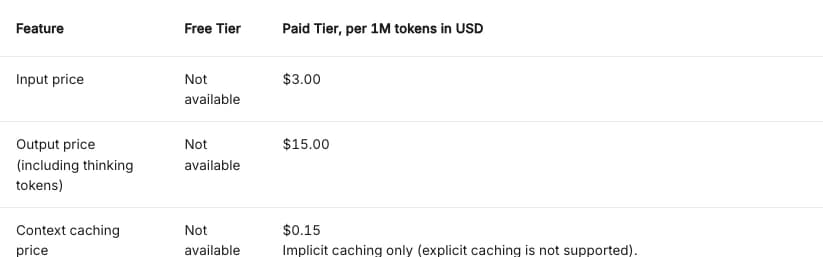
Gemini 4 Neon costs $3 per million uncached input tokens, $15 per million output tokens, and $0.15 per million cached input tokens on the paid Standard Gemini Developer API. Output includes thinking tokens. Google offers Neon in the Gemini app for AI Pro and Ultra subscribers. The API has no Neon free tier. Google's Neon rate card · Google's launch announcement
December 1 changes the comparison with Carbon. Neon costs 50% more per token than Carbon at its introductory rate through November 30, 2026. On December 1, Carbon's listed rates double and Neon becomes 25% cheaper for the same token counts. Quote both periods if your pilot runs across that date. Carbon rate card
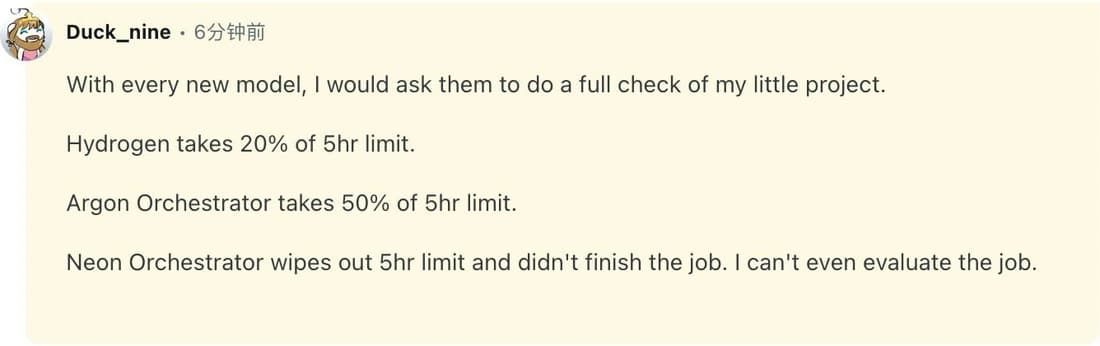
An Antigravity user reported that Neon Orchestrator ran through their five-hour quota before finishing a project check. Budget for the product’s quota if that is where you work. Original comment
Key takeaways
Standard output costs five times as much per token as uncached input. Count both the visible answer and thinking.
Batch and Flex halve the Standard token rates. Priority raises those rates by 80%.
A cache hit lowers the input charge on the matching tokens. Estimate the hit rate using usage data from repeated requests.
Compare cost per accepted result when choosing a model for a workflow. Record the tokens from retries and tool calls alongside the first attempt.
Gemini 4 Neon API rates at a glance
| Paid Gemini Developer API tier | Uncached input / 1M | Cached input / 1M | Output / 1M |
|---|---|---|---|
| Standard | $3.00 | $0.15 | $15.00 |
| Batch | $1.50 | $0.075 | $7.50 |
| Flex | $1.50 | $0.075 | $7.50 |
| Priority | $5.40 | $0.27 | $27.00 |
All figures are USD and were checked on November 19, 2026 for model ID gemini-4-neon. The four Developer API tiers list implicit caching. Standard and Priority list Google Search and Maps grounding separately. For overnight document labeling, check Batch and its turnaround first. For an interactive request, start with Standard. Use Priority where measured latency is worth the premium, and Flex where the workflow tolerates slower or less predictable responses. Google AI Studio pricing
Neon vs Carbon, Argon, and Hydrogen
| Gemini Developer API Standard | Uncached input / 1M | Cached input / 1M | Output / 1M |
|---|---|---|---|
| Hydrogen | $1.50 | $0.075 | $7.50 |
| Neon | $3.00 | $0.15 | $15.00 |
| Carbon and Argon through Nov 30 | $2.00 | $0.10 | $10.00 |
| Carbon and Argon from Dec 1 | $4.00 | $0.20 | $20.00 |
The November and December rows apply to standard paid rates. For a budget that spans the change, split your expected usage by billing period. If you're also considering older models, Gemini 3.8 Flash pricing has its own promotion that ends December 31. Google's family rate card
Google describes Neon as faster and more economical per completed task in its evaluations. For the November promotion, Neon would need to use less than two-thirds of Carbon's billable tokens at the same input, cache and output mix to beat Carbon on token spend. As the mix changes, calculate each charge separately. Fewer retries can make that difference, so measure the whole job against the same acceptance criteria. Google's launch examples describe Google's workloads. Google's launch evaluation
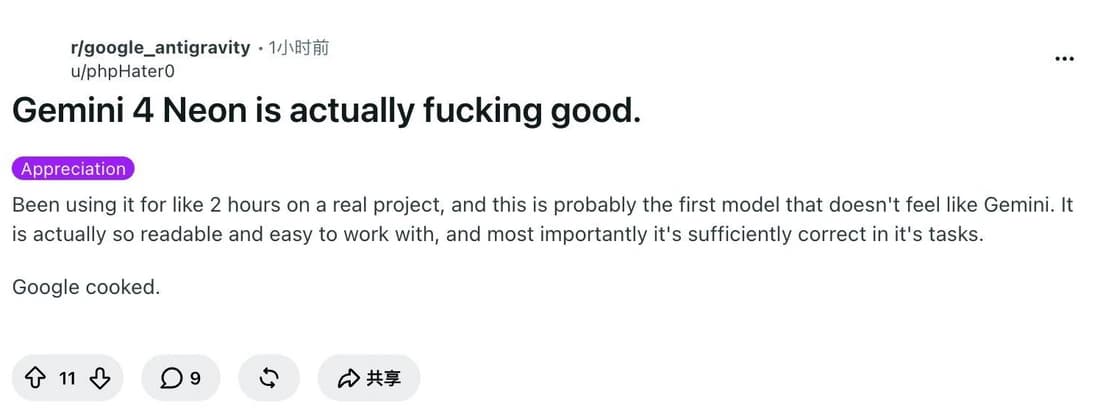
Another Antigravity user found Neon’s results readable and sufficiently correct after about two hours on a project. They supplied no usage counts or bill. Decide what a passing result looks like before comparing cost. Original post
Two API cost examples
A short coding request
A request with 2,000 uncached input tokens and 500 billed output tokens costs $0.01350 in Standard. At 1,000 identical requests, it would cost $13.50. Batch or Flex prices the same token volume at $6.75. If the 500 tokens are the visible answer and the model also used 1,500 thinking tokens, the Standard request rises to $0.03600.
A document workflow with a reused prefix
A Standard request with 100,000 total input tokens, 80,000 cache hits and 2,000 billed output tokens costs $0.10200, or $102.00 for 1,000 requests at the same cache-hit rate. At zero cache hits, the same workload costs $330.00. Those scenarios assume steady usage. Include initial misses, elapsed time between calls and changes to the repeated prefix when estimating actual hit rates. Google's context caching guide
cost in USD = (uncached input × 3 + cached input × 0.15 + billed output × 15) / 1,000,000Local calculator
Estimate Standard API costs
Use billed input and output tokens for one request. Values stay in your browser.
Paid Gemini API Standard, USD. Output includes thinking tokens. Taxes, tools and subscriptions are excluded. Google API pricing
The calculator estimates Standard Developer API token charges for a synchronous request and for a month of identical requests. Its output field takes all billed output, including thinking. For instance, if a structured extraction is accepted with 300 visible tokens and 700 thinking tokens, enter 1,000. Test shorter output and a lower supported thinking level on the same sample, then compare corrections, quality and billed usage. With a long document, also keep enough of the shared context window available for the expected output. Neon model documentation
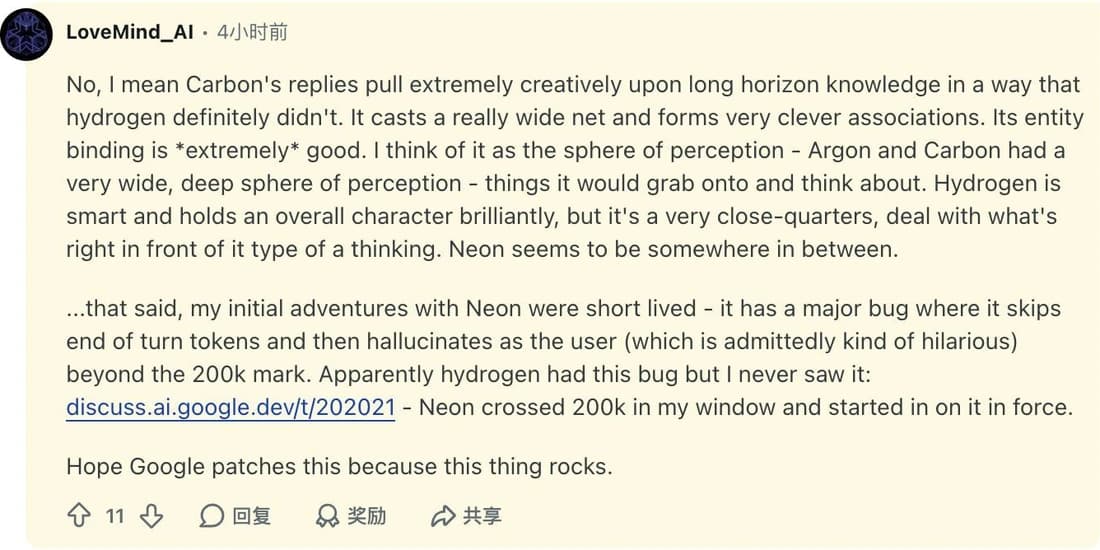
LoveMind_AI reported that one Neon conversation started generating text in the user’s role after about 200,000 tokens. For long jobs, record failures and retries alongside ordinary token usage. Original comment
Tool charges, Cloud endpoints, and app plans
Google lists 5,000 monthly Search grounding queries at no additional tool charge across Gemini 3 and newer models, then $14 per 1,000, subject to a Developer API daily cap. Maps has a separate allowance and the same overage rate on the Neon Standard rate card. One prompt can trigger several searches. Add the billable query count and the tokens from any tool use Google meters to your estimate. Gemini Developer API pricing
On Google Cloud, the global Standard rates are also $3 input, $0.15 cached input, and $15 output per million tokens. The listed non-global rates are $3.30, $0.165, and $16.50. Google Cloud dates its Neon cache-write pricing to January 12, 2027. Its pricing notes also cover retrievable usage for completions over 32K tokens that end in a timeout. A retry allowance matters for jobs that use long decodes. Hosting, taxes and provider-specific extras fall outside the calculator. Google Cloud pricing and footnotes
If you want the model picker in the Gemini app, start with the current Google AI plan page for your region. Google announced Neon for Pro and Ultra in the Gemini app and for paid Pro and Ultra users in Antigravity. Check your product quota there. If you're deploying with an API key, look at API billing for the project that serves the traffic. Google AI plans · Antigravity rollout
Try the research workflow in Tabbit
When the job is to compare rates on public pages, open the two price cards in separate tabs in Tabbit Browser. Use Chat with Page to extract each rate with its effective date. Ask for a link to the row and verify it before you copy the figure into a budget. This is a browser workflow for reading the price cards. Use Google AI Studio or Google Cloud to run a measured Neon API pilot. Tabbit Browser workflow guide
In one Chat with Page run in Tabbit, the selected model was Gemini-4-Carbon low. With the Google AI Studio page attached, it returned the three Neon rates and linked to the right section. The available model list on that account lacked Neon on November 19. The run verifies the price-checking workflow with Carbon.
 Tabbit Browser
Which Gemini model should you budget for?
| If your work looks like this | Start here | What to measure |
|---|---|---|
| Routine extraction or repetitive short tasks | Hydrogen | Acceptance rate at half Neon's Standard token rates |
| A coding or analysis workflow you run often | Neon and Carbon on the same sample | Cost of all attempts per accepted result, projected at both November and December rates |
| A complex task that needs sustained reasoning | Carbon as the comparison baseline | Whether fewer retries justify the December rates |
| Asynchronous jobs with a recurring prompt prefix | Neon Batch or the lower-cost model that meets the quality bar | Turnaround, cache hits and total cost after retries |
For a mixed queue, try Hydrogen on the routine items and send a small group of harder items to Neon and Carbon. Set a measurable acceptance rule before you run it, such as passing a relevant test or matching fields against a checked record. Use our Carbon and Hydrogen comparison to pick the baseline. The separate Hydrogen review and Carbon review cover model behavior outside the rate card.
A Hacker News user said Neon caught several errors in another model’s output. Put a few known errors in a second-pass review sample and count how many the model catches at each thinking level. Original comment


FAQ
How much does Gemini 4 Neon cost on the API?
Google lists $3 per million uncached input tokens, $15 per million output tokens including thinking, and $0.15 per million cached input tokens on the paid Standard Gemini Developer API. Rates were checked on November 19, 2026.
Can I use Gemini 4 Neon for free?
Neon has no free Gemini Developer API tier. Google announced access in the Gemini app for AI Pro and Ultra subscribers. Check the current model picker and plan terms for your account.
Is Gemini 4 Neon cheaper than Carbon?
Through November 30, 2026, Carbon's introductory Standard rates are $2 per million input and $10 per million output, below Neon's $3 and $15. From December 1, Google's listed Carbon rates move to $4 and $20, putting Neon 25% lower for equal token counts.
Does Gemini 4 Neon charge for thinking tokens?
Yes. Google includes thinking tokens in output billing. For example, a response with 1,000 visible tokens and 4,000 thinking tokens uses 5,000 output tokens for the cost estimate.
Does Gemini 4 Neon support explicit caching?
The Gemini Developer API rate card lists implicit caching only for Neon. Google Cloud has separate cache-write pricing and terms, so use the table for your serving platform.
What does Gemini 4 Neon cost with Batch or Flex?
Both paid tiers list $1.50 per million uncached input tokens, $7.50 per million output tokens, and $0.075 per million cached input tokens. Batch suits asynchronous jobs and Flex suits workloads that can tolerate slower or less predictable responses.