
Start with GLM-5.4 for coding in a supported editor if you already have the GLM Coding Plan. Start with Gemini 4 Carbon if you're building a service that needs a documented, billable API now. Z.ai has released GLM-5.4 to coding subscribers and is holding its general Model API until a security assessment is complete. Carbon is available through Google's paid Gemini API under the stable ID gemini-4-carbon. Access and pricing were checked on November 24, 2026. Z.ai model documentation · Google's Carbon rollout
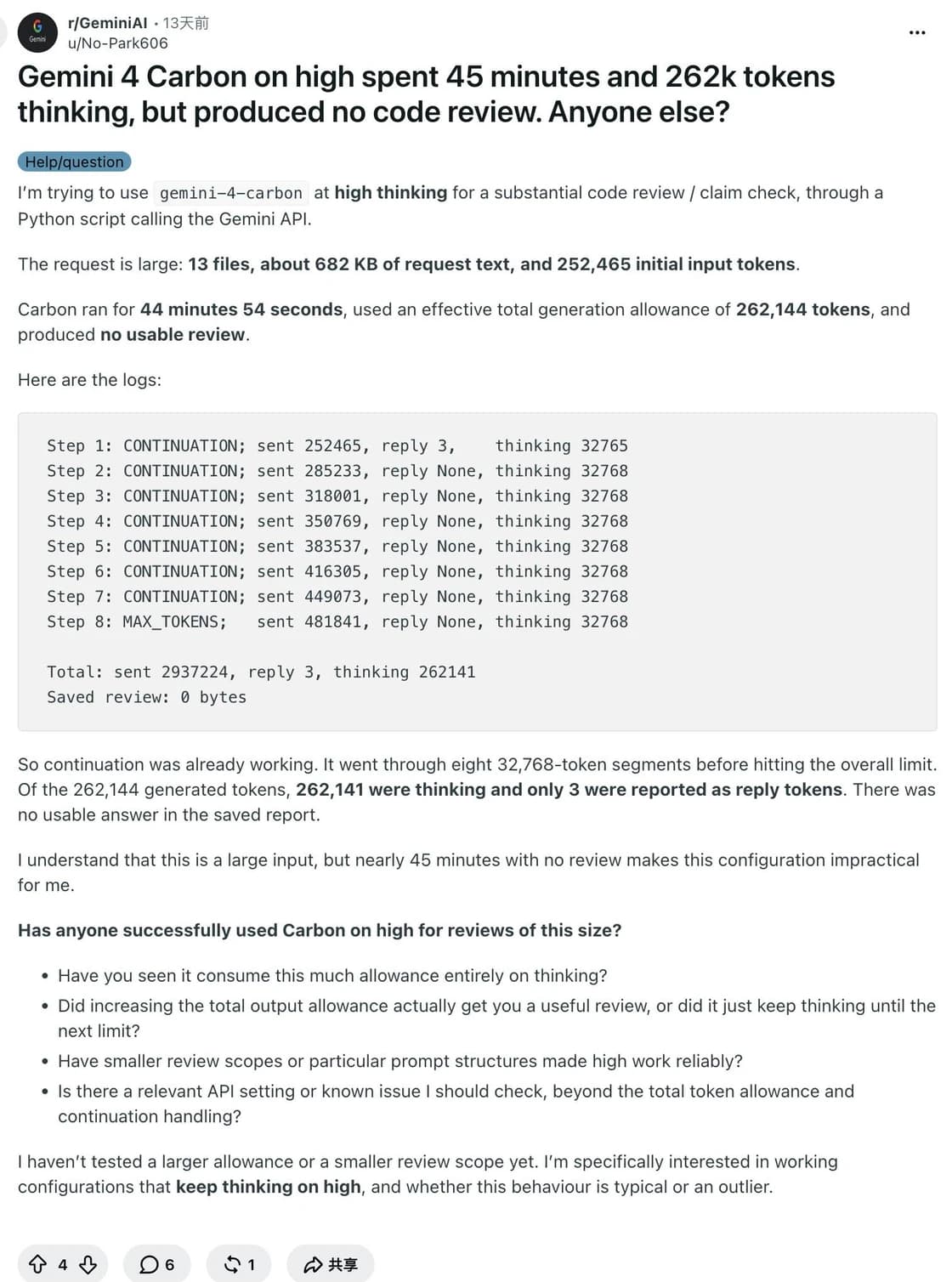
Even when the model is available, the thinking setting can change whether a job finishes. In one Gemini API user's code-review attempt, Carbon at High spent about 45 minutes without returning the requested review. That's one report with one client and task, but it captures a test worth running before either model goes into a daily workflow.
For UI work, the comparison ends when the patch has been checked in a browser. The Tabbit Browser example below gives both patches that same last step.
Key takeaways
GLM-5.4 is the subscription trial. The Coding Plan includes the model across tiers. Current eligible plans get 1.5× as many GLM-5.4 tokens on the same quota as GLM-5.3.
Carbon is the API trial. Google's standard introductory rate is $2 input and $10 output per million tokens. Google says $4 and $20 apply after the introductory period expires on November 30.
Both can take screenshots. Google also documents audio input for Carbon. Test attachment support and actual context handling in your client.
Public coding scores need their settings attached. Google publishes Carbon's evaluation protocol. Z.ai's launch article supplies a smaller architecture experiment and product demos. Use a shared test to decide which model works better on your repository.
Measure completed work. Keep the starting commit, fixtures, tools and stopping rule fixed. Record accepted patches, elapsed time, and the bill or quota used.
GLM-5.4 vs Gemini 4 Carbon at a glance
| Decision factor | GLM-5.4 | Gemini 4 Carbon |
|---|---|---|
| Provider and release | Z.ai, November 23, 2026 | Google DeepMind, paid developer rollout November 10, 2026 |
| Practical access | GLM Coding Plan through supported coding tools, including ZCode | Paid Gemini API, Google AI Studio, and supported Google product surfaces |
| Identifier | glm-5.4 on supported Coding Plan tools, glm-5.4[1m] in the documented Claude Code setup | gemini-4-carbon on the Gemini API |
| General API and spend | General Model API pending security assessment. Coding Plan uses subscription credits | Standard Gemini API pricing per million input and output tokens |
| Published limits | 1M context, 128K maximum output | 1,048,576 shared context, 65,536 default for thinking and output, higher with long decode |
| Documented input | Video, images, text and files | Text, images, video, audio and PDF |
| Weights | Planned after safety hardening. Downloadable weights unverified at the cutoff | Hosted model |
Sources for the table are the GLM-5.4 model page, Z.ai model switching guide, Google's model catalog, and Google's announcement. The Carbon review describes Google's high-effort use cases. The GLM-5.3 overview gives the previous model's baseline.
Coding benchmarks and what to test
Z.ai describes GLM-5.4 as a Loop Transformer. A block of 28 layers from the GLM-5 base runs twice, which increases computation without adding another independently trained copy of those weights. Z.ai's technical post includes an architecture comparison on a 30B model and demonstrates the flagship generating code for visual projects. Use the smaller experiment to understand the architecture. The demos give you candidate tasks to reproduce on the released model. Z.ai's technical post
DeepMind's Carbon evaluation gives a different kind of evidence. It documents repository-oriented SWE-sweep and FrontierSWE 2 alongside the test setup. Google says it used the Gemini API with the highest thinking setting for most in-house results, and the SWE-sweep row uses mini-swe-agent with a subtask-weighted reward. A weighted reward can reflect partial progress. It doesn't say how many of your changes a maintainer would merge. The report has no GLM-5.4 row. Keep that distinction when reading the evaluation report or the Carbon model card.
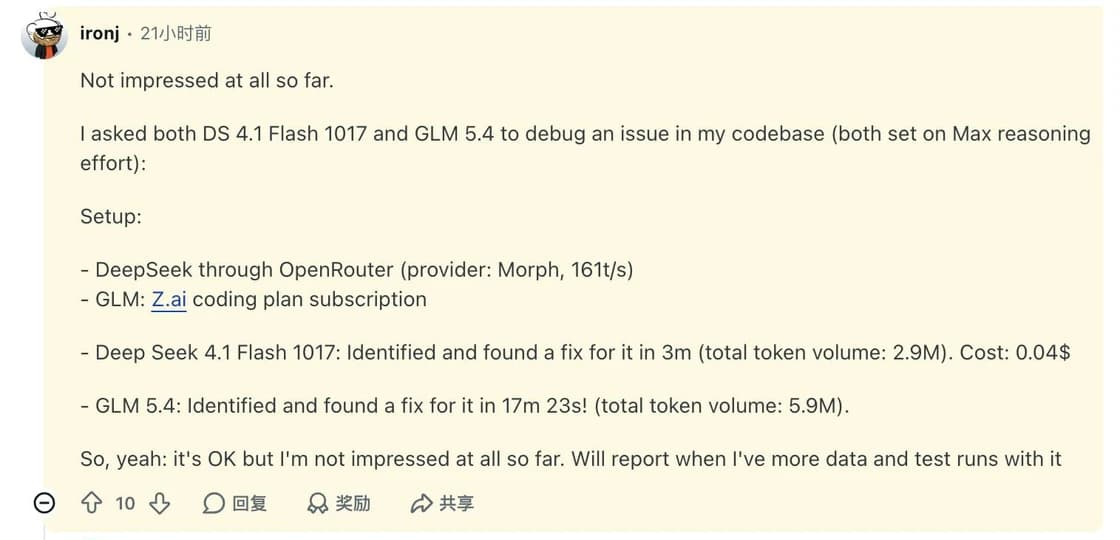
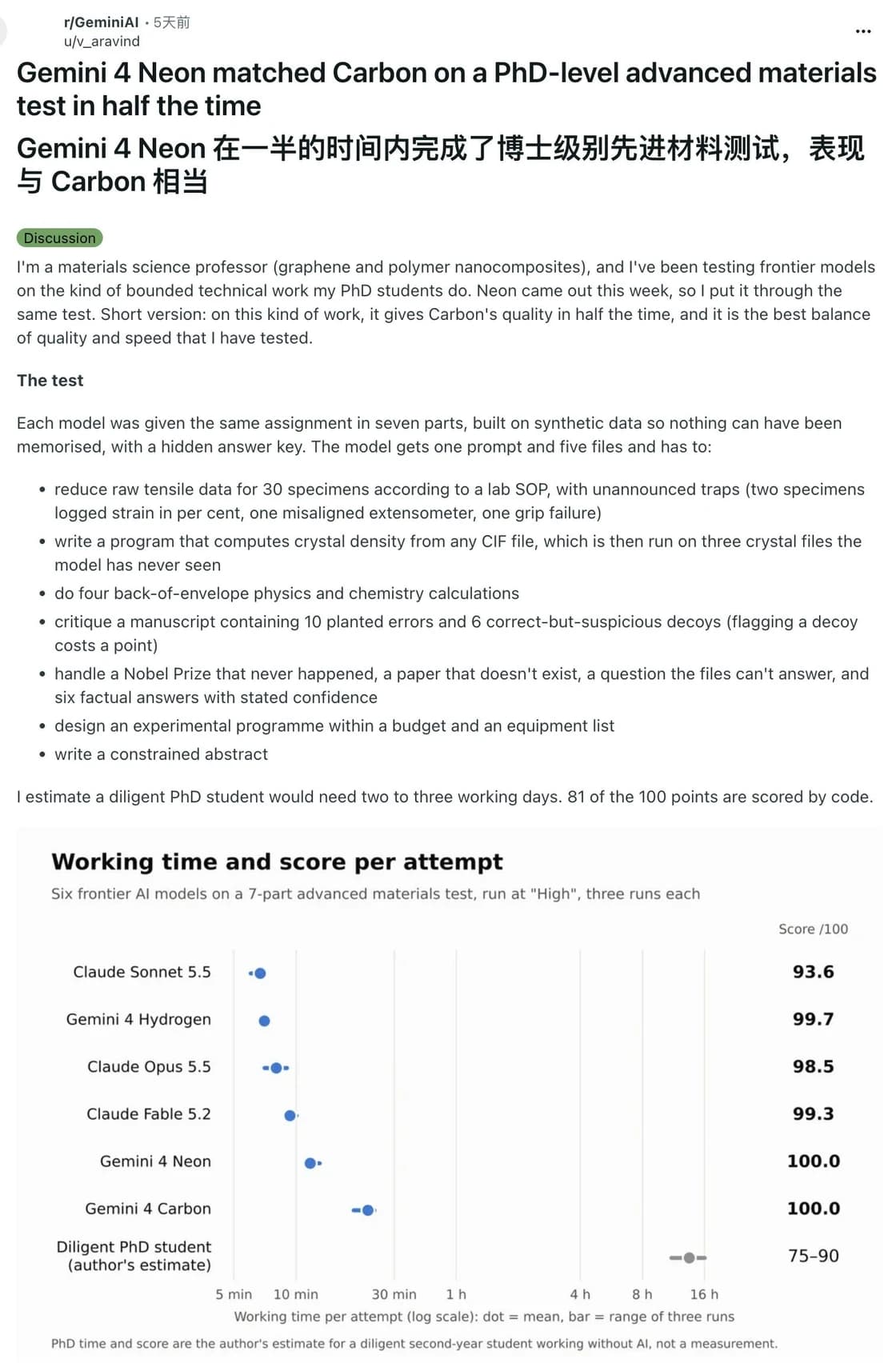
For an editor trial, start with a task the team already knows how to judge. Suppose an archive dialog closes after a failed save and loses a user's draft. Supply the same branch, screenshots and test command. Require a small patch, a regression test for the failed save and a report of the commands that actually ran. Then inspect the diff for unrelated edits. This measures whether the model reproduced the problem, preserved the existing success path and produced a change that fits your codebase.
For an API trial, keep the same task but record the retry count, timeout and response that your application receives. API integration also means choosing what happens if a model returns a partial patch or the job reaches its token budget. Save the model ID, reasoning setting and outcome so another engineer can reproduce the comparison. If you use different clients, record the result as a workflow trial. A model running through an editor has different filesystem context and tool prompts from an API call. The Antigravity orchestrator guide explains how the coding environment shapes the result.
Pricing, quota and access
The GLM Coding Plan starts at a published $18 monthly list price. The personal plan currently documents five-hour and weekly credit limits. Lite has 2,000 credits per five-hour window and 10,000 per week. The shorter cap still matters if you run several long jobs on one afternoon. ZCode's FAQ explains that eligible current plans get more usable GLM-5.4 tokens for the same quota as GLM-5.3, and that legacy V1 plans are excluded from the 1.5× benefit. The amount of work that fits depends on usage and your reasoning setting. Coding Plan details · ZCode's quota FAQ
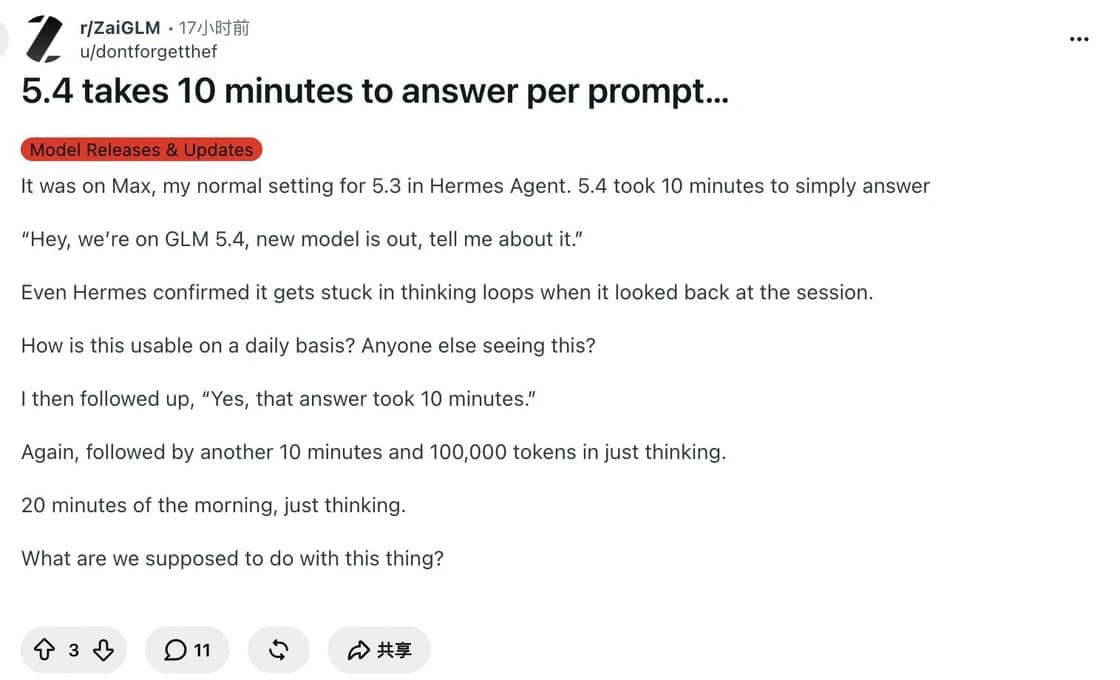
Z.ai's tool-specific setup supports changing models in an existing plan. In Claude Code, the documented full-context setup uses glm-5.4[1m] and a corresponding compaction-window setting. Other tools can use glm-5.4 as described in the switching guide. A supported client accepting the model ID confirms that route. For an app backend, check the general Model API's status before planning around a GLM-5.4 endpoint, price or service limit. Z.ai model switching guide
Carbon charges for usage through the paid Gemini API. Google announced standard introductory rates of $2 per million uncached input tokens and $10 per million output tokens. After November 30's introductory period ends, Google says those rates become $4 and $20. The consumer Gemini app and API billing are separate product surfaces. For an API budget, use the rate and usage data of the project that will run the code. Google's announcement and pricing footnote · Gemini API pricing
Take one illustrative run with 100,000 uncached input tokens and 20,000 billable output tokens including thinking. At the introductory rate, the input is $0.20 and the output is $0.20, so the run is $0.40. At the announced later rate it is $0.80. That leaves out extra charges or discounts and assumes one run. If two attempts fail and a third passes, use the total across the three. The Carbon pricing guide breaks down the billing categories.
For a week of editor work, tally plan spend, completed issues and how often a quota window stopped work. For an API job, calculate cost per accepted task = bill for all attempts ÷ number of accepted tasks. When comparing the workflows, keep dollars, GLM plan credits, and time in separate columns so you can see which constraint changes the choice.
Screenshots, video and long context
GLM-5.4 and Carbon both fit tasks with visual input, such as reading a screenshot of a cutoff button or checking an annotated design against a source file. Z.ai lists video, image, text and files. Google's Gemini API docs also list audio and PDF for Carbon. If an input matters, send a small fixture through your exact client first. An editor may pass only one image, resize an attachment, or handle video differently from the model's own interface.
Context and output limits answer different questions. Context determines how much material fits in the session. The generation limit governs how much the model can produce. ZCode says it may compact a GLM-5.4 session near 966K. A long session can start dropping details sooner in another client. For an issue that crosses packages, give the model an explicit list of files and the acceptance criteria at the start, then repeat the criteria when the session resumes after compaction. ZCode context FAQ · Gemini API models
Don't use the window as an instruction to attach the entire repository. A focused packet makes omissions easier to see. Include the failing test or browser trace, the relevant implementation, and the surrounding contract. Ask the model to cite the files behind its diagnosis. If it keeps investigating after that, check whether the additional work changed the diagnosis or simply consumed the budget.
For Carbon, the 1,048,576 tokens are shared by inputs, thinking and output. Its 65,536-token default covers thinking and output together. Long decode can use more of that shared budget across continuation hops. A very large prompt still leaves less room for the response. Google’s long decode guide
Run the same browser acceptance check
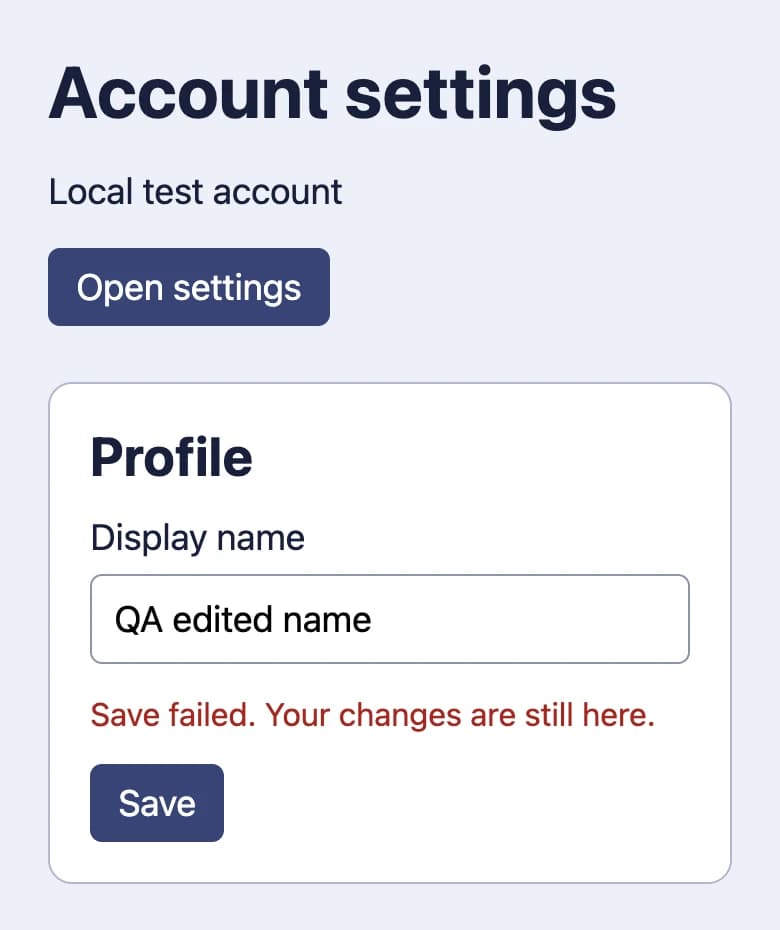
Say both models fix an issue where a settings dialog loses an unsaved value on desktop and clips its Save button on mobile. Build each patch from the same commit, run it locally with the same seeded data, and write down the expected behavior before opening either preview. This is the browser half of the comparison. The Carbon browser-use guide and GLM-5.3 browser-use guide explain how the browser layer fits alongside a coding model.
Tabbit Browser's CLI workflow can open a local preview, exercise the interaction, and collect a screenshot and DOM evidence. Using a single browser and a fixed checklist keeps viewport, storage state and click sequence consistent. Follow the Codex and Tabbit CLI workflow for the browser handoff. In a manual check, use Tabbit or another browser with the same viewport settings.
Open the local preview and use only the seeded test account.
At desktop width, open Settings and change the display name.
Trigger the fixture's failed save. Check that the dialog stays open
and the edited value is still present. Capture the result.
Reload with a clean session. At 390 CSS pixels, repeat the interaction.
Check that Save is visible and clickable and there is no horizontal scroll.
Return the viewport, each pass or fail, and the screenshot filenames.
A screenshot records what was visible. The interaction and DOM check record what the button did and whether the page overflowed. Review both alongside the regression test and the source diff. This small procedure is a reusable acceptance checklist. Each coding account still needs access to its own model and the model's repository tools.
 Tabbit Browser
Which model should you try first?
| Your next job | Start with | What should decide the trial |
|---|---|---|
| Daily repository work with an existing GLM Coding Plan | GLM-5.4 | Accepted changes per week, review time and five-hour quota interruptions |
| A service, scheduled job or product feature needing a general API now | Gemini 4 Carbon | Integration fit, timeouts and cost per accepted job |
| A screenshot-led UI bug | Either available route | The same reproducible browser check and a passing regression test |
| An API workload that needs audio input | Gemini 4 Carbon | Audio ingestion, transcript or evidence accuracy, and total usage |
| A project that must run on your own infrastructure | Keep looking for verified downloadable weights | A published weight artifact, license and deployment requirements |
If you already pay for the GLM Coding Plan, use GLM-5.4 on the next two or three issues where you have a clear test or review standard. If you're integrating a hosted model today, start with Carbon and instrument the first job before increasing the thinking budget or traffic. For a difficult repository task, set a fixed stopping rule for both and compare the changes a maintainer would accept. For a visual patch, run the same browser checklist on both outputs. The result of that trial is a stronger purchasing signal than a small leaderboard difference.

FAQ
Is GLM-5.4 better than Gemini 4 Carbon for coding?
Trial GLM-5.4 first if you already use the GLM Coding Plan and want a coding agent inside your editor. Trial Gemini 4 Carbon first for a production integration that needs a documented general API. Available evidence leaves the overall coding ranking unresolved.
Does GLM-5.4 have a public general-purpose API?
On November 24, 2026, Z.ai's model documentation said the general Model API would open after a security assessment. The Coding Plan can already route GLM-5.4 through supported clients, including ZCode and Claude Code.
How much does Gemini 4 Carbon cost?
Google announced introductory standard Gemini API rates of $2 per million input tokens and $10 per million output tokens. After the introductory period expires on November 30, 2026, Google says the rates become $4 and $20 respectively.
Can both models read screenshots and video?
Z.ai lists images and video among GLM-5.4's inputs. Google lists both for Gemini 4 Carbon and also documents audio input. Verify attachment support in the client or integration you will use.
How large are their context windows and output limits?
Z.ai lists a 1M context and maximum output of 128K for GLM-5.4. Google lists 1,048,576 tokens shared by input, thinking and output. Carbon uses a 65,536-token default for thinking and output, with higher limits through long decode.
Can I self-host GLM-5.4 or Gemini 4 Carbon?
Neither model had downloadable weights verified on November 24, 2026. Z.ai says it plans to release GLM-5.4 weights after safety hardening. Google provides Carbon through its hosted products and developer surfaces.