
Deleting one bookmark is easy. Deleting a folder full of them is the moment your stomach drops. A user in r/chrome described exactly that: “Just accidentally deleted a bookmark (it was a folder actually).” Chrome also makes the situation harder to read because a deletion can be synced to other devices, while the visible undo control may vanish quickly.
Start with the least risky action: stay in the same Chrome profile, open Bookmark Manager, and try Undo or Ctrl+Z. Do not restart, sign into another device, or overwrite profile files until you know which copy still has the links. This guide explains what to try, where the boundaries are, and how Tabbit fits after you have a verified library.
Key takeaways
Try Undo in Bookmark Manager before touching sync or local files.
If another device still shows the bookmarks, isolate it before Chrome sync can change its state.
Bookmarks.bakcan be useful, but it is not a guaranteed restore point and its path varies by platform and profile.An earlier HTML export or a system backup is safer than editing the only live Chrome profile.
Tabbit can import a surviving, verified library. It cannot undelete Chrome data.
Recovery options at a glance
| Route | Best time to use it | Risk | What it can recover | Stop if |
|---|---|---|---|---|
| Undo in Bookmark Manager | Immediately | Low | The most recent deletion | Undo is gone or the manager no longer shows the same state |
| Protect another device | Before it receives sync changes | Medium | A still-intact bookmark tree | You cannot verify which account/profile it uses |
Inspect Bookmarks.bak | After making copies of both files | Medium to high | A previous local bookmark state, if present and usable | The file is missing, stale, or you would overwrite the only copy |
| Import an HTML export | Whenever a verified export exists | Low | Bookmarks and folders | The file is empty, from the wrong profile, or untrusted |
| Restore a system backup | After the profile and date are identified | Medium | The profile state covered by the backup | The restore would erase newer work without a copy |
1. Try Undo before anything else
Open chrome://bookmarks in the same profile that lost the bookmark. If Chrome shows an Undo action after the deletion, use it once and confirm that the folder and several links returned. Reddit advice also reports that Ctrl+Z can work while Bookmark Manager is focused, even after a small popup has disappeared. That is community guidance, not a Chrome guarantee.
If Undo works, export the restored tree immediately. Google documents the desktop Chrome bookmark import and export flow. Give the file a profile and date in its name, open it, and check more than one folder. The separate guide on exporting Chrome bookmarks has the click path.
Do not keep deleting or rearranging items while testing. Every extra change makes it harder to tell which state you are trying to recover.
2. Treat sync as a boundary, not a restore button
Chrome Sync can make bookmarks available on signed-in devices. Google's sync help describes that account-backed behavior. It does not promise a user-facing version history for bookmarks. If the deletion is already in the synced state, opening more devices may make the same empty folder appear everywhere.
If a second computer still has the links, disconnect it from the network or pause Chrome sync before inspecting the folder. Confirm that it uses the expected Chrome profile. Then export an HTML copy from that device. Do not delete the bookmarks on the good device to “test” whether sync is fixed.
The practical difference is simple:
| Question | Sync answers | Backup answers |
|---|---|---|
| Can I see this library on a signed-in device? | Sometimes, if the account and state match | Not necessarily |
| Can I inspect a dated copy without changing Chrome? | No | Yes |
| Can I roll back a deletion with a documented version picker? | Not from the normal Chrome bookmark UI | Only if your backup system kept that version |
| What should I do first after a deletion? | Protect any intact device | Make a separate copy |
For a wider sync diagnosis, read why browser sync fails across devices and browser sync problems. Neither article turns sync into a recovery guarantee.
3. Check local profile files without replacing them
Chromium stores profile data in a platform-specific user-data directory. The Chromium user data directory documentation explains why the location differs between Windows, macOS, Linux, and profiles. On Windows, a common Chrome profile is under %LOCALAPPDATA%\\Google\\Chrome\\User Data\\Default; macOS commonly uses ~/Library/Application Support/Google/Chrome/Default. A different profile uses another folder name.
Close Chrome only after you have copied the current Bookmarks file and any Bookmarks.bak file to a separate, private folder. A Reddit commenter suggested that .bak may reflect the last state from before Chrome restarted. That can be useful, but it is not an official recovery contract. It may be absent, stale, or already reflect the deletion.
Keep the originals untouched. If the file contains JSON-like text, make a working copy and inspect it with a text editor or a bookmark parser. Do not rename, delete, or swap files in the live profile until you have another copy and understand which profile you are editing. If the links are valuable, professional data-recovery help is safer than repeated experiments.
4. Look for an HTML export or a real backup
Search private storage, external drives, and your backup system for .html files with names such as “bookmarks” or “favorites”. Open the file in a browser. You should see the folder names you recognize, not just a blank page. Apple’s Safari import documentation confirms the normal cross-browser handoff: bookmarks exported from Chrome in HTML can be imported elsewhere.
If you use Time Machine, Windows File History, a managed workstation backup, or a dated disk snapshot, restore the profile into a temporary location first. Compare it with the current profile. A restore that silently replaces the only current copy can turn one loss into two.
If no copy contains the missing folder, be direct about the result: Chrome may not be able to recover it. Deleted bookmark data can be gone after sync, profile cleanup, or later writes. No tool can promise a result without an intact earlier state.
A practical next step: Tabbit Browser
Tabbit Browser belongs after recovery, not before it. The product's import screen can bring a surviving Chrome library into a desktop workspace. Use the HTML file or profile that you have already opened and checked, and keep Chrome installed until several folders and links work in the new browser.
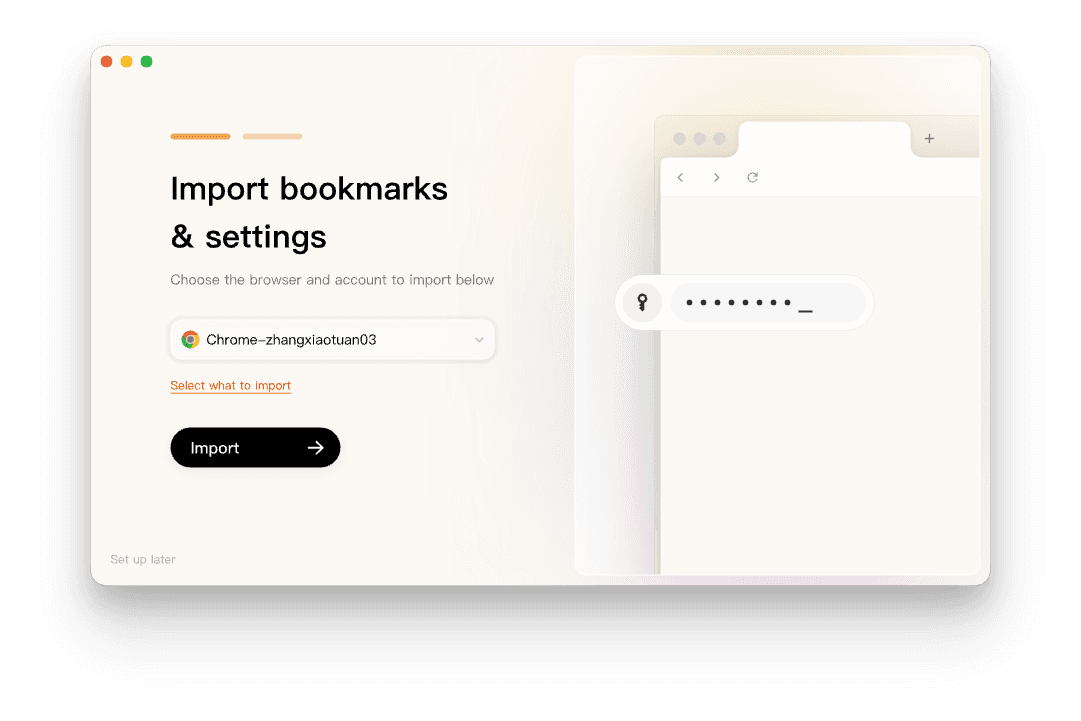
The safe sequence is:
Recover or locate a copy outside the live profile.
Open it and check folders from different parts of the tree.
Install Tabbit from the AI browser download page.
Choose the intended Chrome profile or import the checked HTML file when the workflow offers it.
Open a few imported links before changing or removing Chrome.
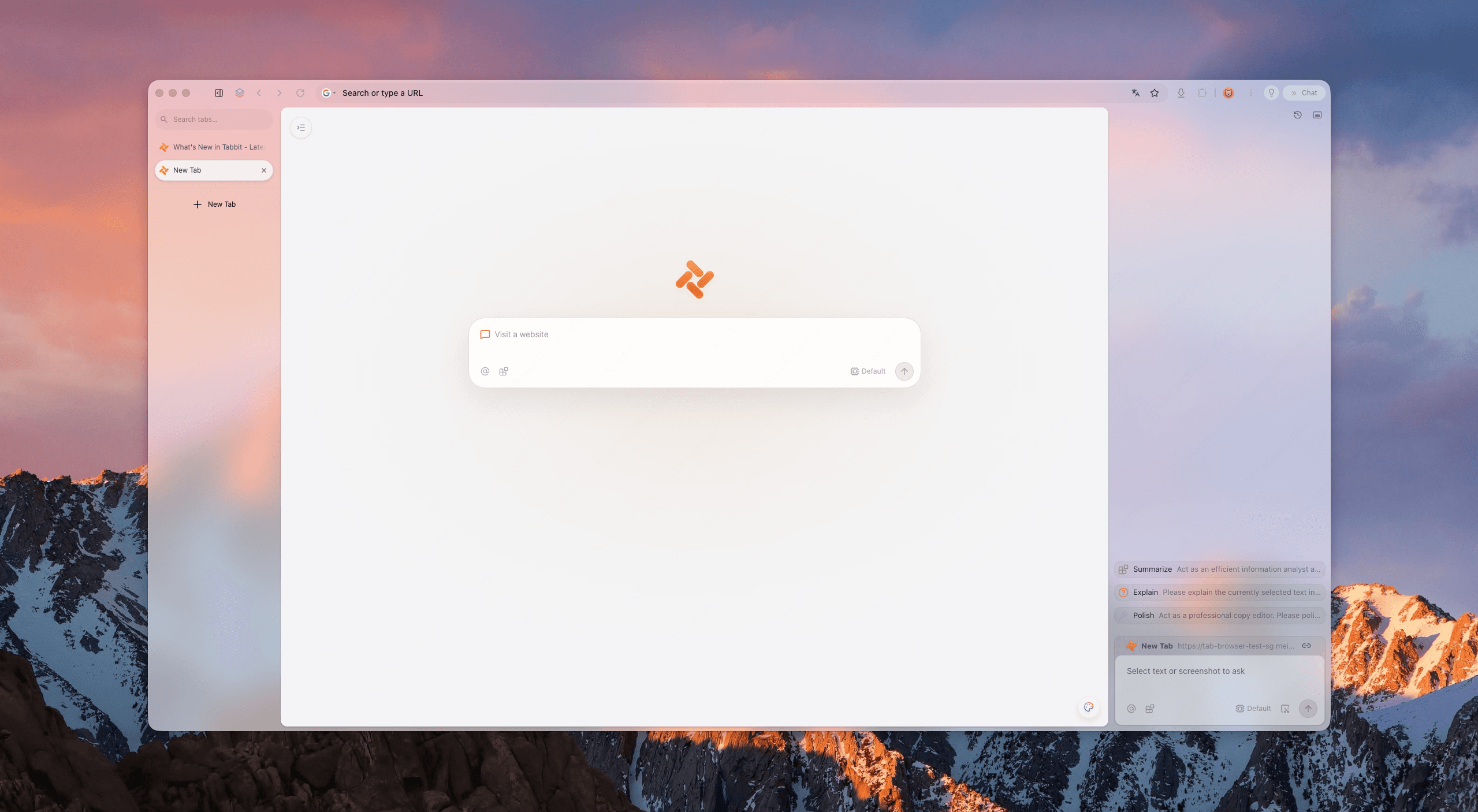
Tabbit can help when your next problem is managing the links you saved. Its workspace and browser productivity features can keep active research separate from the recovery process. It does not provide Chrome's deleted-item history, reverse a Google Account sync event, or recover a bookmark that exists in no surviving copy. If you are still deciding whether to move, see Tabbit vs Chrome and using a second browser.
Choose the next move by your situation
| Situation | Next move | Do not do yet |
|---|---|---|
| You deleted a folder seconds ago | Stay in Bookmark Manager and try Undo | Restart Chrome or open every synced device |
| Another computer still shows the folder | Isolate it, confirm profile, export HTML | Let an unverified sync state overwrite it |
You found Bookmarks.bak | Copy both files and inspect a working copy | Replace the live Bookmarks file immediately |
| You have an old HTML export | Open and validate it, then import | Assume the file contains passwords or open tabs |
| You have a system backup | Restore to a temporary location and compare dates | Restore over the only current profile |
| No copy has the missing data | Stop destructive experiments and record what is gone | Pay for a tool that promises guaranteed recovery |
The honest answer
The first ten minutes matter, but they do not make recovery certain. Undo may work. A still-intact device, an HTML export, or a dated system backup may work. Bookmarks.bak may help, or it may not exist for the state you need.
After you verify what survived, make a second copy and only then move it into a new workspace. Back up browser data before switching, and use browser history and bookmark search when the link is missing but the page itself may still be findable. If you want Tabbit as the destination, install it from the download page and keep the original profile until the import passes your own spot check.

常見問題
Can I undo a deleted bookmark in Chrome?
Sometimes. Open Chrome's Bookmark Manager immediately and look for the Undo action, or try Ctrl+Z on Windows and Linux while the manager is focused. The action may disappear after time or other changes, so do not assume it will always be available.
Will Chrome Sync restore deleted bookmarks?
It might show the older library on another device if that device has not received the deletion, but sync can also propagate the deletion. Pause before opening more signed-in devices and protect any device that still has the bookmarks. Sync is not the same as a dated offline backup.
What is Bookmarks.bak in Chrome?
It is a local profile file that may contain an earlier bookmark state, but its presence and freshness depend on Chrome version, platform, profile, and what happened after the deletion. Copy both the current Bookmarks file and the .bak file before examining anything. Never replace the only profile file without a separate copy.
Can I recover Chrome bookmarks from an HTML file?
Yes, if you exported the bookmarks before they disappeared. Open the HTML file to confirm that it contains the expected folders, then import it through the destination browser's bookmark manager. An HTML export contains bookmarks, not a live browser window or saved passwords.
Can I recover deleted bookmarks on Android or iPhone?
The desktop Chrome help flow is the practical export and file-recovery path. Check another signed-in device carefully, but avoid assuming the mobile app has a desktop-style restore command. If the library exists on a computer, export it there before changing the phone profile.
Can Tabbit recover my deleted Chrome bookmarks?
No. Tabbit Browser is not a Chrome rollback or forensic recovery tool. After you recover and verify an HTML file or an intact Chrome profile, Tabbit can import supported browser data and give the surviving library a desktop workspace.