Character consistency
Ask for a choice that only the character backstory can answer.
Does the reply use the right values and history without restating the card?
Gemma 4 × roleplay
A good RP session can still break after a long scene. Characters drift, replies repeat, and a huge context window does not fix a weak card or a mismatched template. Use a small test set first, then tune one layer at a time.
Verify the model facts ↗
A five-minute check
Run the same short prompts after each change. Score the reply, not the benchmark. Keep the card, context size and sampler fixed while you compare one model or setting.
Ask for a choice that only the character backstory can answer.
Does the reply use the right values and history without restating the card?
Ask for the next scene with one unusual constraint.
Does it add a specific detail while respecting the character voice?
Generate a short scene, then regenerate it twice.
Count repeated sentences, phrases and looping endings across swipes.
After several turns, ask for a four-line scene state.
Check names, goals and unresolved facts against the transcript.
Place a fact near the start, add a long scene, then ask about it.
Record whether the fact survives and whether prose quality falls.
One layer per change
Roleplay quality is a chain. A repetition loop can come from the model, a stale chat template, a noisy card or a sampler that pushes the same token path.
Separate Gemma 4 31B dense from 26B A4B MoE. Q4, Q5 and Q6 describe quantized files, not new official models. Copy the exact checkpoint or provider slug.
Use the Gemma 4 template and tokenizer supplied by your backend. Google documents native system prompts and optional thinking. If control markers appear as prose, stop and fix this layer.
Start with the official baseline of temperature 1.0, top-p 0.95 and top-k 64. Change one value, save the result, and compare the same test prompts. DRY can be a community experiment, not a guarantee.
Remove duplicate lore, vague traits and instructions that fight each other. Keep a compact scene state and summarize old turns before the context becomes noise.
Community presets can help, but names such as Queen, Equinox or a publisher-specific GGUF are not Google defaults. Keep safety rules and local policies in force.
Character card hygiene
Give the model fewer rules to reconcile. Write what the character does, wants and remembers, then leave room for the scene to move.
Use two or three short dialogue examples with the rhythm you want. Avoid ten examples that repeat the same sentence shape.
Separate immutable facts from current goals and temporary scene details. When a fact changes, update one source instead of adding a correction below it.
State what the character controls and what belongs to the user. This reduces the model writing the user character or forcing a scene outcome.
At a natural break, store location, relationships, open threads and the last action. A short recap is easier to retrieve than a duplicated transcript.
Keep the source beside the chat
Tabbit is not a local Gemma runner or a SillyTavern card manager. It helps when your RP context lives across a character wiki, a setting document, research tabs and several model answers.
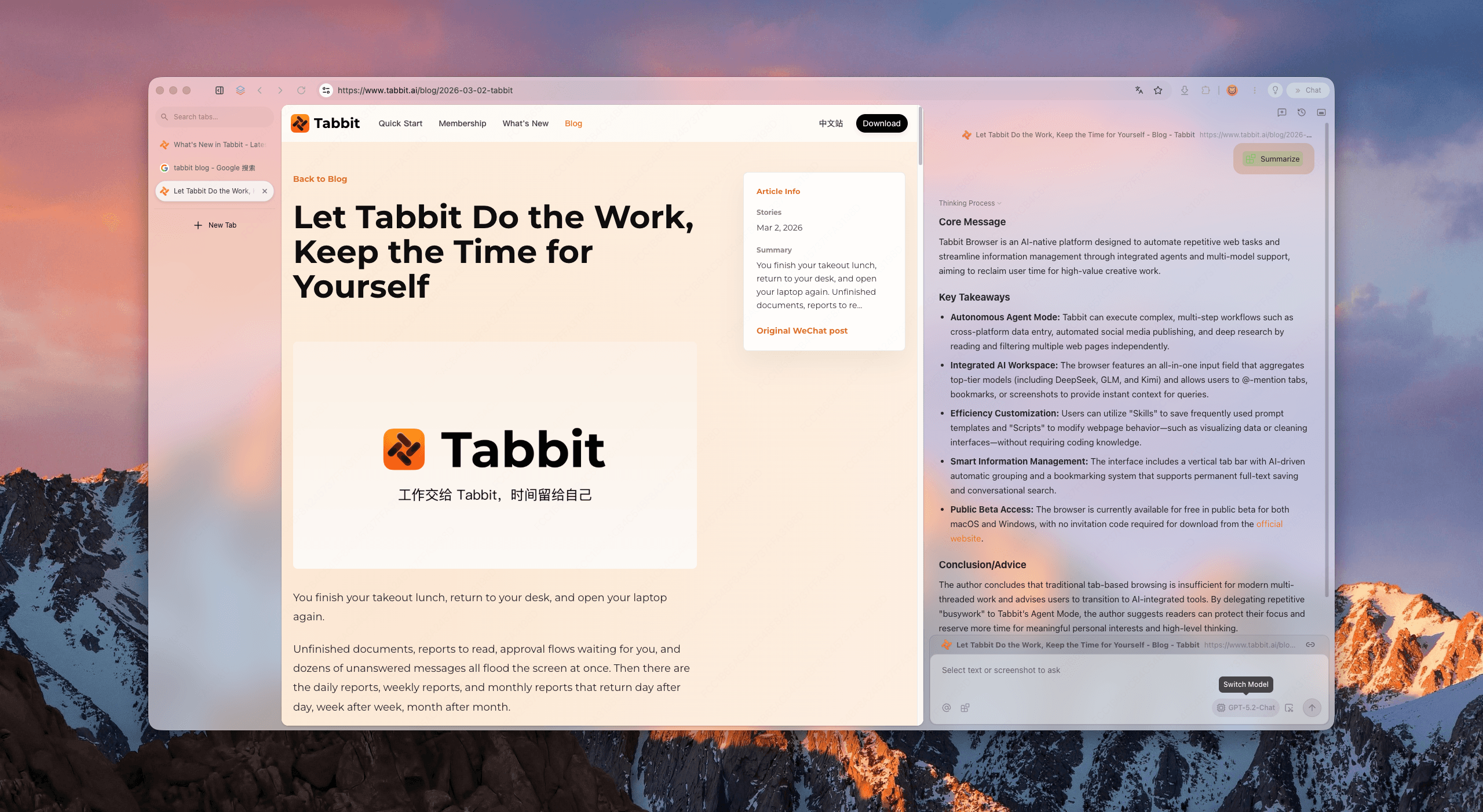
Keep canon notes, a setting page or a research source in a tab. Tabbit can summarize the page in its side panel so you do not have to copy every paragraph.
Use @ to bring an open page, screenshot or file into the prompt. Ask for a continuity check, a scene recap or a list of unresolved facts.
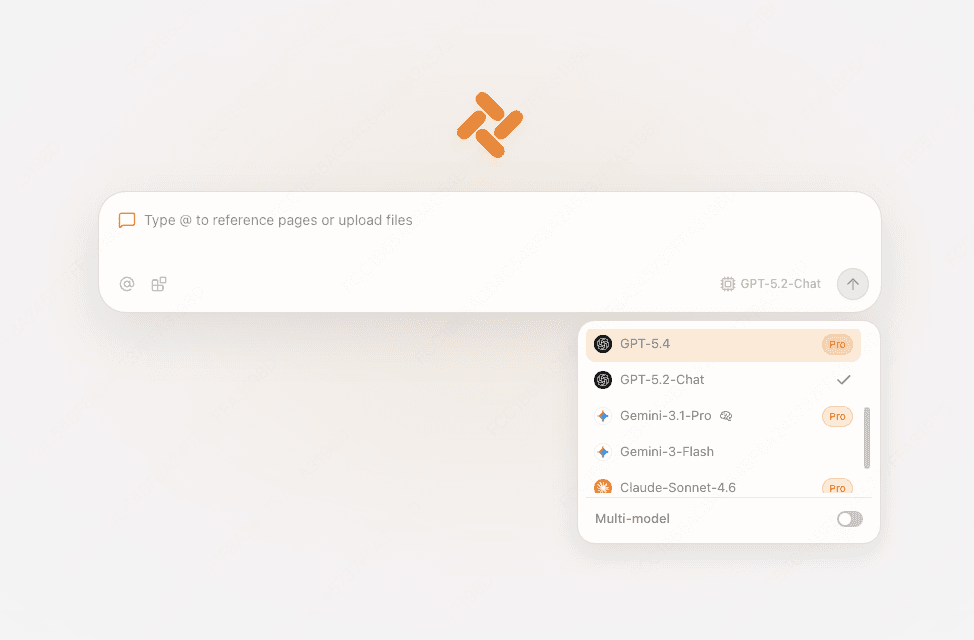
The picker currently shows models such as GPT-5.4, GPT-5.2-Chat, Gemini-3.1-Pro, Gemini-3-Flash and Claude-Sonnet-4.6. Availability changes, and Gemma 4 is not shown in this screenshot.
Choose the right surface
The two workflows solve different bottlenecks. Keep the local frontend when you need card and sampler control. Use the browser when the missing piece is information spread across pages and files.
| Local RP frontend | Tabbit | |
|---|---|---|
| Character cards and lorebooks | Detailed controls | Reference the source page |
| Gemma 4 checkpoint | Bring your own backend | Use a model shown in the picker |
| Template and sampler | Inspect and tune | Handled by the selected model |
| Web and file context | Paste or integrate | @ open tabs and files |
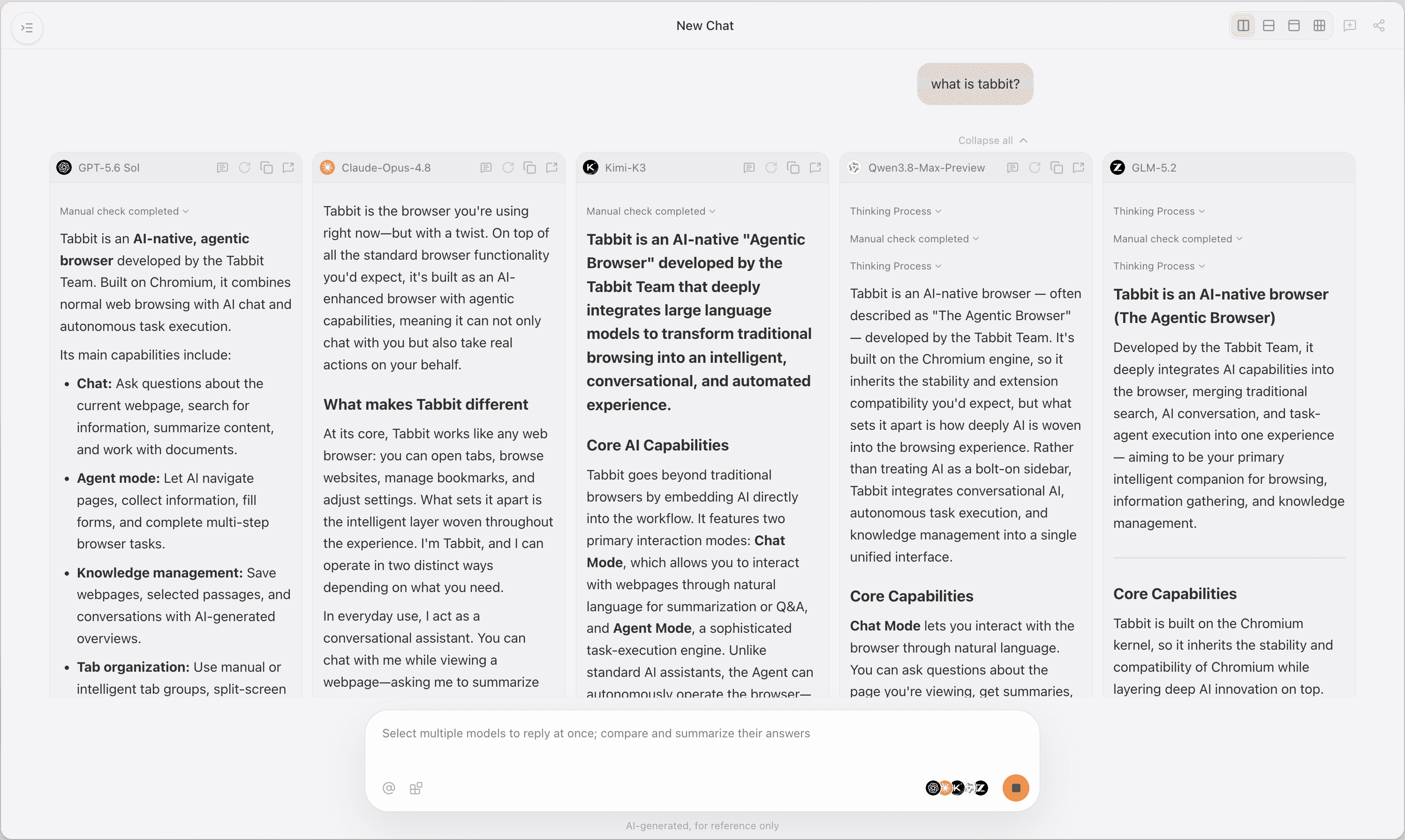
| Model comparison | Change endpoint or preset | Ask several listed models at once |
FAQ
It can be a useful RP model, but the experience depends on the exact variant, template, sampler, card and context. Test character consistency and repetition with your own prompts.
Google describes 31B as dense and 26B A4B as a mixture-of-experts model with about 3.8B active parameters. Compare the files and memory you can actually run, then use the same RP test.
Check the template and tokenizer first, remove duplicated context, then establish the official sampler baseline. Change one sampler value at a time and record the result.
No. Gemma 4 12B, 26B A4B and 31B are documented with up to 256K context, but retrieval and prose quality can still change as the prompt grows.
Do not assume it. Open the current picker after installation and use a model that is actually listed. This page does not promise Gemma 4 support in Tabbit.
Follow the model provider rules, local law and product policy. This guide does not provide jailbreaks or instructions to bypass safety filters.
Run a small RP test, fix the template chain, and keep your canon notes close. Install Tabbit when you want to read those sources and compare available models in one browser workspace.
Available for macOS and Windows. The model list can change.