Use the official ID
For the instruction checkpoint, the Hugging Face model card uses `google/gemma-4-26B-A4B-it`. A file named Q4, Q5 or Q6 is a quantized distribution of a checkpoint, not a new Google model family.
Gemma 4 26B A4B × SillyTavern
The name is the first trap. Gemma 4 26B A4B is a 25.2B-parameter MoE model with about 3.8B active parameters, not a dense 26B model and not the 31B checkpoint. This guide connects the name, memory plan, template and frontend before you tune a character card.
Check the official model facts ↗
Name and hardware first
Google lists the official checkpoint as Gemma 4 26B A4B. The model card gives 25.2B total parameters, 3.8B active parameters, 30 layers, image input and a 256K context window. Community GGUF filenames may add IT, Q4 or a publisher name, but those are distribution labels.
For the instruction checkpoint, the Hugging Face model card uses `google/gemma-4-26B-A4B-it`. A file named Q4, Q5 or Q6 is a quantized distribution of a checkpoint, not a new Google model family.
The active-parameter count helps explain speed, but it does not make every file a 4 GB model. Weight size, runtime buffers, the 550M vision encoder, KV cache and your context length all affect memory. Treat a community file size as a starting measurement.
31B is dense and has about 30.7B parameters. 26B A4B routes tokens through experts. A preset or hardware estimate written for Gemma 4 31B can be a poor fit for this checkpoint.
SillyTavern connection order
A clean sequence prevents a template problem from looking like a bad sampler or a weak character card.
Choose the provider or local file that identifies Gemma 4 26B A4B or its precise publisher variant. Copy the provider model slug instead of typing `gemma-4-26b` from memory.
For KoboldCpp, llama.cpp, LM Studio or an OpenAI-compatible provider, use the connector and endpoint documented by that backend. Start with Chat Completions when it is supported; Text Completion leaves more formatting to you.
Google’s format uses `system`, `user`, `model`, `<|turn>` and `<turn|>`. Use the current Gemma 4 or Gemini tokenizer and chat template supplied by the backend. Do not paste a Gemma 3 template over it.
Google documents `<|think|>` at the start of the system prompt as the thinking switch. Test it with a short prompt, then add the card and preset. Keep only the final answer in ordinary multi-turn history.
Community posts mention SillyTavern 1.17, KoboldCpp `--jinja`, the Gemma4/Gemini tokenizer and a literal `<|think|>` marker. These reports are useful troubleshooting leads, not Google defaults for every backend.
When the output breaks
Check the tokenizer, chat template and backend generation mode. If the backend already applies the template, adding raw markers can produce visible control tokens. Compare thinking on and off with one short prompt.
Confirm that your SillyTavern version and loader support the Gemma 4 format. A community solution may use `--jinja` or `<|think|>`, but the correct switch depends on the server. Do not combine every workaround at once.
Reduce duplicated context before changing temperature. Verify the context limit and the card text, then test Google’s starting sampler values, temperature 1.0, top-p 0.95 and top-k 64, as an experiment.
A browser-side alternative
Tabbit is not a local GGUF runner or a SillyTavern card manager. It helps when the setup problem is scattered reference material: keep a character page, lore notes or a troubleshooting thread in view while you chat with a model available in the browser.
Download the Chromium-based desktop browser for macOS or Windows. This route does not require a local Gemma file, a provider key or a SillyTavern server.
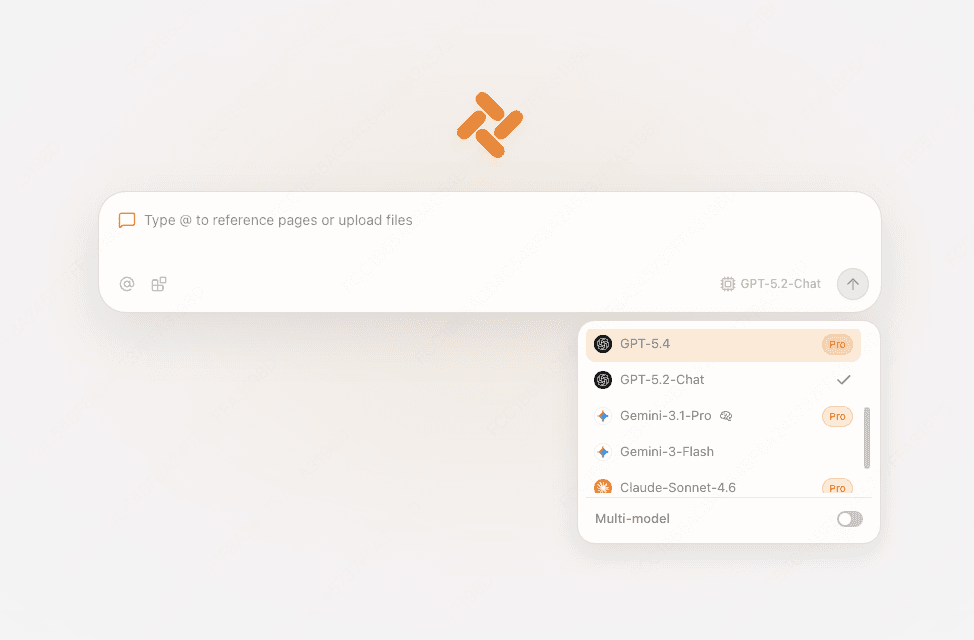
Open the in-product model picker after installation. The current product code lists models such as GPT-5.4, Gemini-3.1-Pro, Claude-Sonnet-4.6 and DeepSeek-V4-Flash. Gemma 4 is not in that current mapping, so this page makes no promise that Tabbit runs Gemma.
Leave the wiki or setup notes in a tab. Type `@` to reference a page, screenshot or file, then ask for a scene outline, a consistency check or a summary of the settings you just compared.
Choose the client
They solve different bottlenecks. Keep the specialized frontend when you need its controls, and use a browser route when your context lives across pages and files.
| SillyTavern | Tabbit | |
|---|---|---|
| Character cards and lorebooks | Core workflow | Reference the source page |
| Gemma 4 local checkpoint | Bring your own backend | Use a model shown in the picker |
| Template and sampler control | Detailed | Managed by selected model |
| Web context | Paste or use extensions | Reference a tab or file with @ |
| First useful reply | Endpoint + template + preset | Install + choose a listed model |
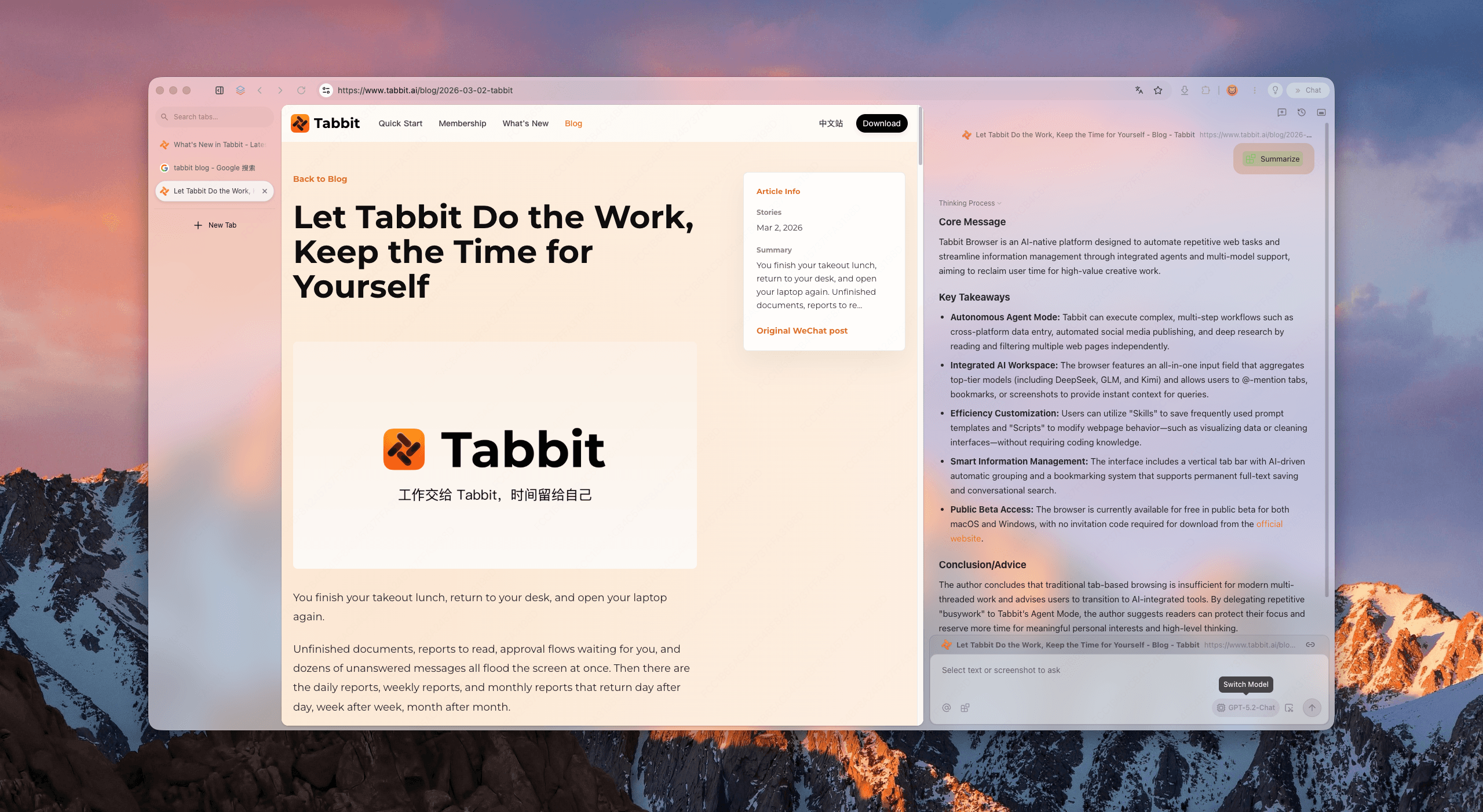
Leave the wiki or setup notes in a tab. Type `@` to reference a page, screenshot or file, then ask for a scene outline, a consistency check or a summary of the settings you just compared.
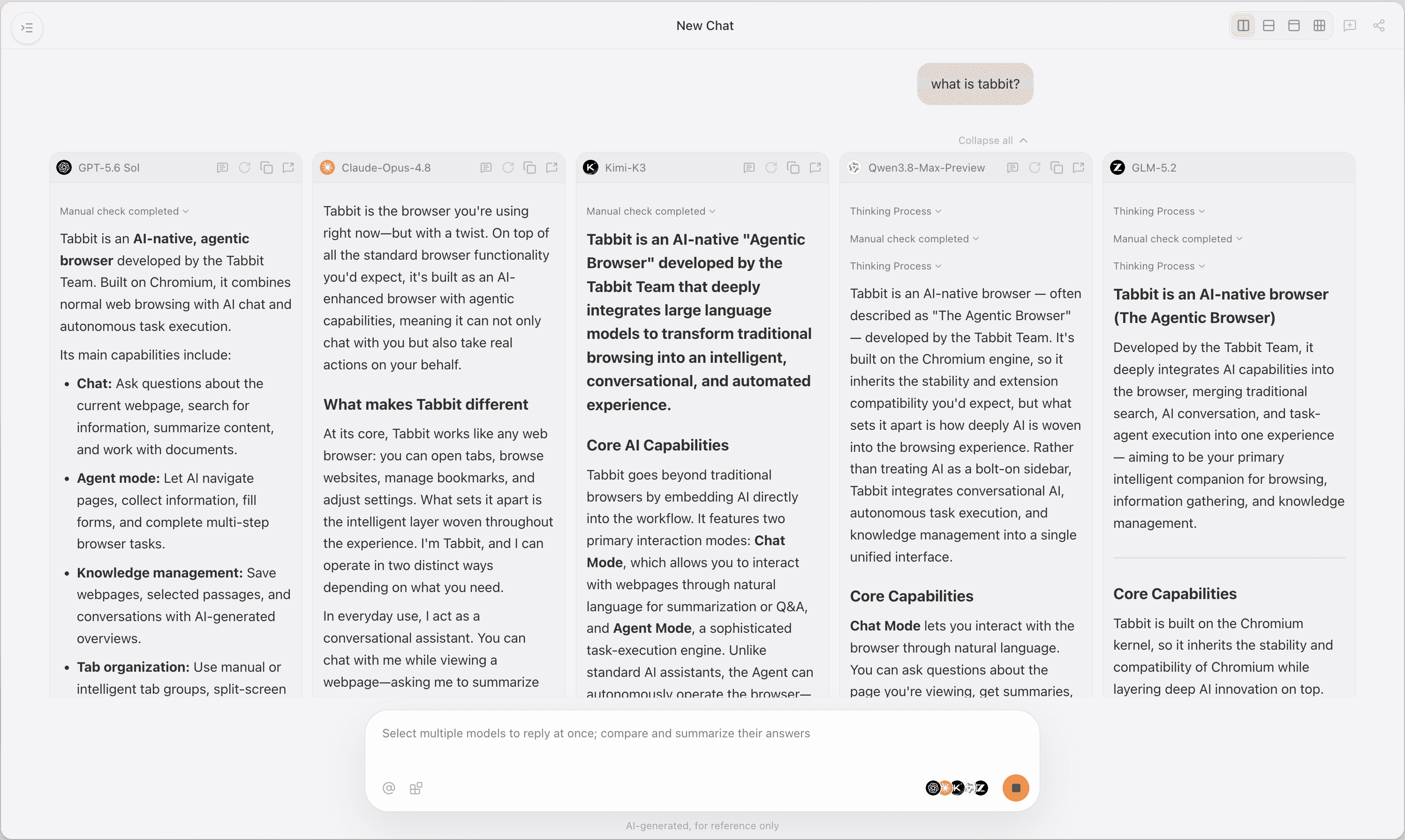
Reference a tab or file with @
FAQ
Google’s model card calls it Gemma 4 26B A4B. The Hugging Face instruction checkpoint is `google/gemma-4-26B-A4B-it`. Community publishers may add their own suffixes.
No. 26B A4B is MoE with 25.2B total and about 3.8B active parameters. Gemma 4 31B is a dense 30.7B model.
There is no single safe number. Quantized weight size, KV cache, context, runtime buffers and the vision encoder all matter. Measure the exact GGUF or backend build with your intended context instead of using the 26B label as a VRAM promise.
The tokenizer or template may not match the backend, or the server may have exposed the control token as text. Check Gemma 4 formatting, tokenizer and thinking settings before changing sampling.
Do not assume it can. The current Tabbit model mapping does not include Gemma 4. Install Tabbit and use only a model shown in the current picker.
For local Gemma 4 26B A4B, verify the checkpoint, memory budget, tokenizer and template in that order. For a character wiki or setup thread beside chat, install Tabbit and check the current model picker.
Available for macOS and Windows. Model availability can change.