 Tabbit
01Breadth first
Scan
Map a new topic quickly. Collect definitions, players, themes and open questions before going deep.
RESEARCH PROTOCOL BUILDER
Start with the task, not a blank chat. Define the question, source boundary, depth and deliverable—then let Tabbit turn your choices into a repeatable research protocol.
PICK A METHOD
A good AI tool does more than search. It helps you choose a method that fits the decision you need to make.
Map a new topic quickly. Collect definitions, players, themes and open questions before going deep.
Set the same criteria for every option and produce a matrix you can defend in a meeting.
Follow a company, claim or market signal through primary sources, filings and conflicting accounts.
Turn papers, notes or saved tabs into a literature map, brief or clear next-step recommendation.
THE RESEARCH PROTOCOL
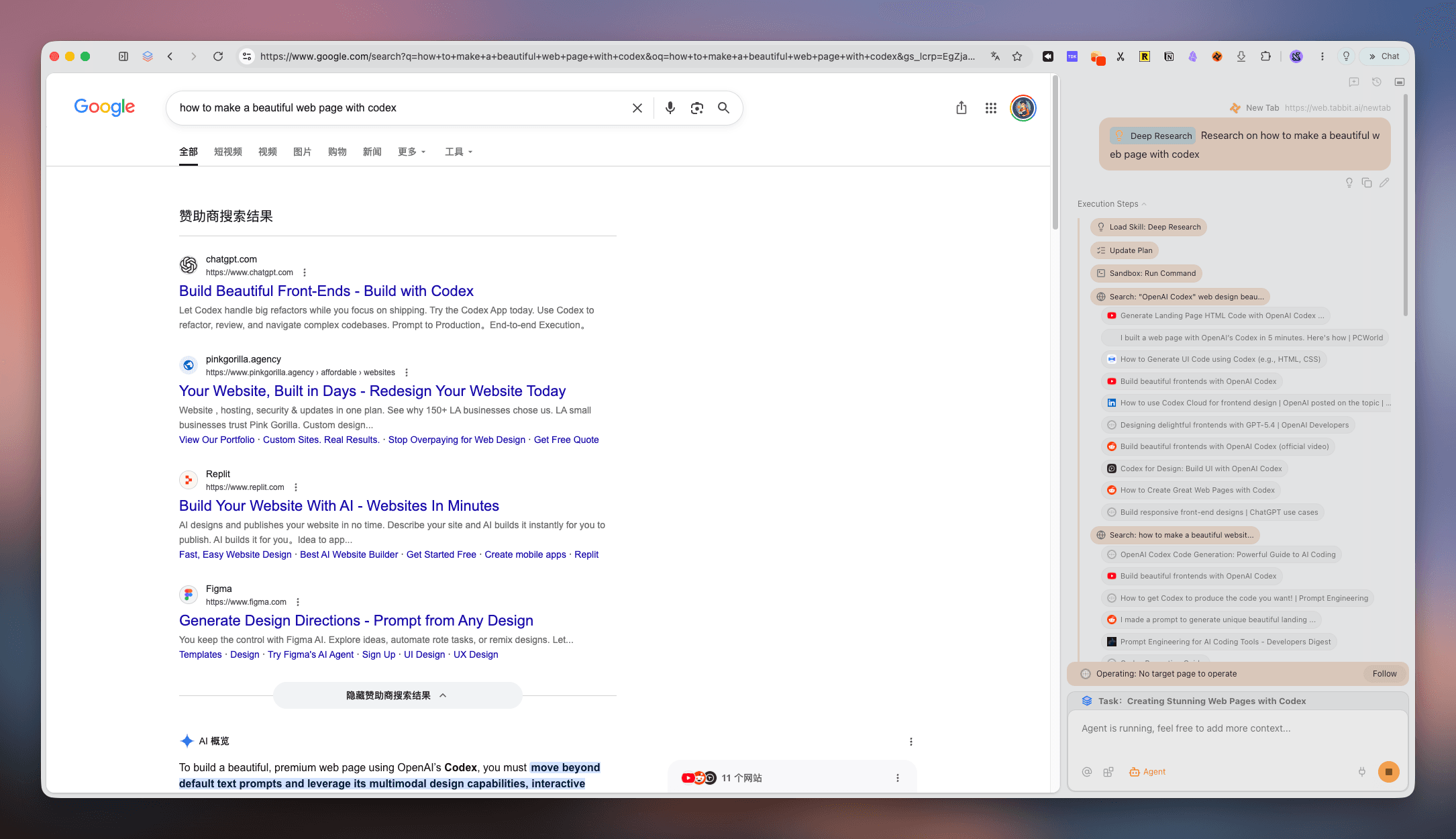
Tabbit keeps the research plan visible so you can tighten the scope, change the method or add a source rule before the browser does the heavy lifting.
Turn a broad prompt into one decision, a time window and a clear audience.
Choose primary sources, independent coverage, language and freshness requirements.
Start with a map, follow the gaps, cross-check claims and stop when the brief is complete.
Pick the format that makes the next action obvious: brief, matrix, map or memo.
OUTPUT TEMPLATES
The best deep-research tool is measured by what happens after the report. Start from the format your reader needs.
A concise answer with context, key findings, caveats and linked next steps.
Shared criteria, visible trade-offs and a recommendation that survives scrutiny.
Themes, methods, disagreements and the gaps worth investigating next.
Options, evidence, risks and a proposed action for a real business decision.
WHY TABBIT
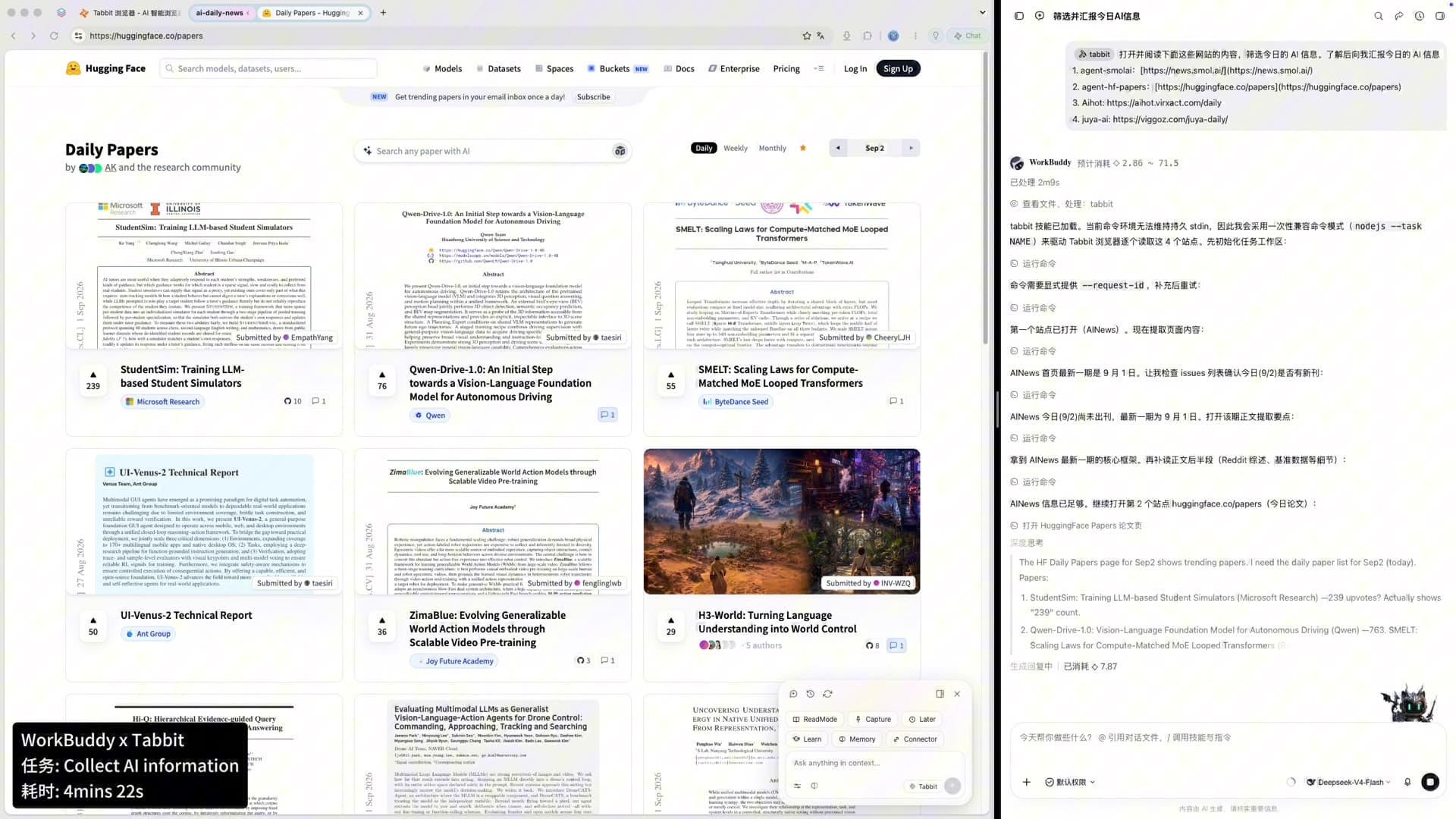
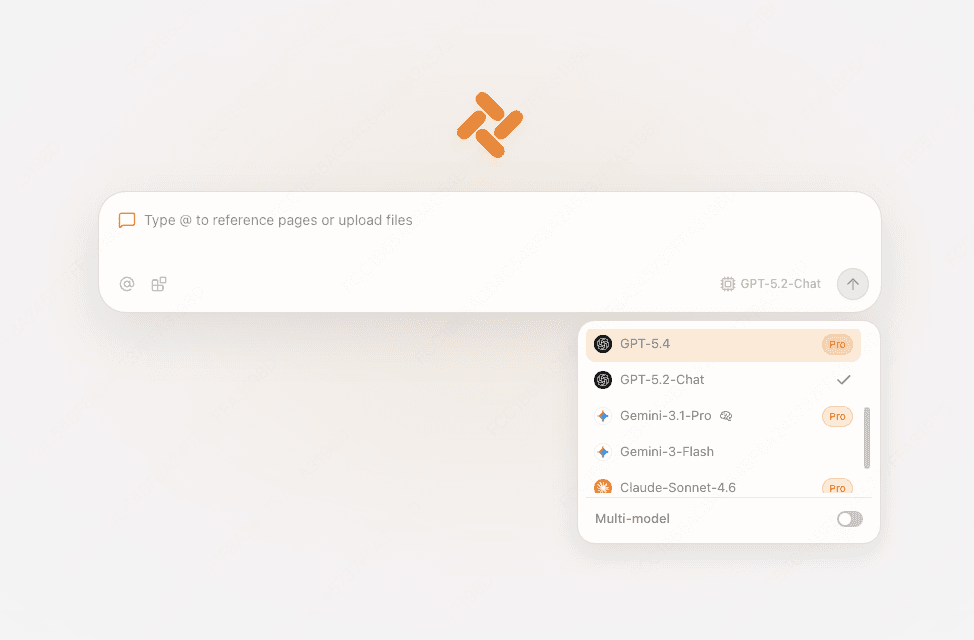
Tabbit is a downloadable AI-native browser, so your protocol, model choice and working tabs stay together instead of being scattered across extensions and chat windows.
Reference open pages or uploaded files with @ context rather than copying fragments into a separate chat.
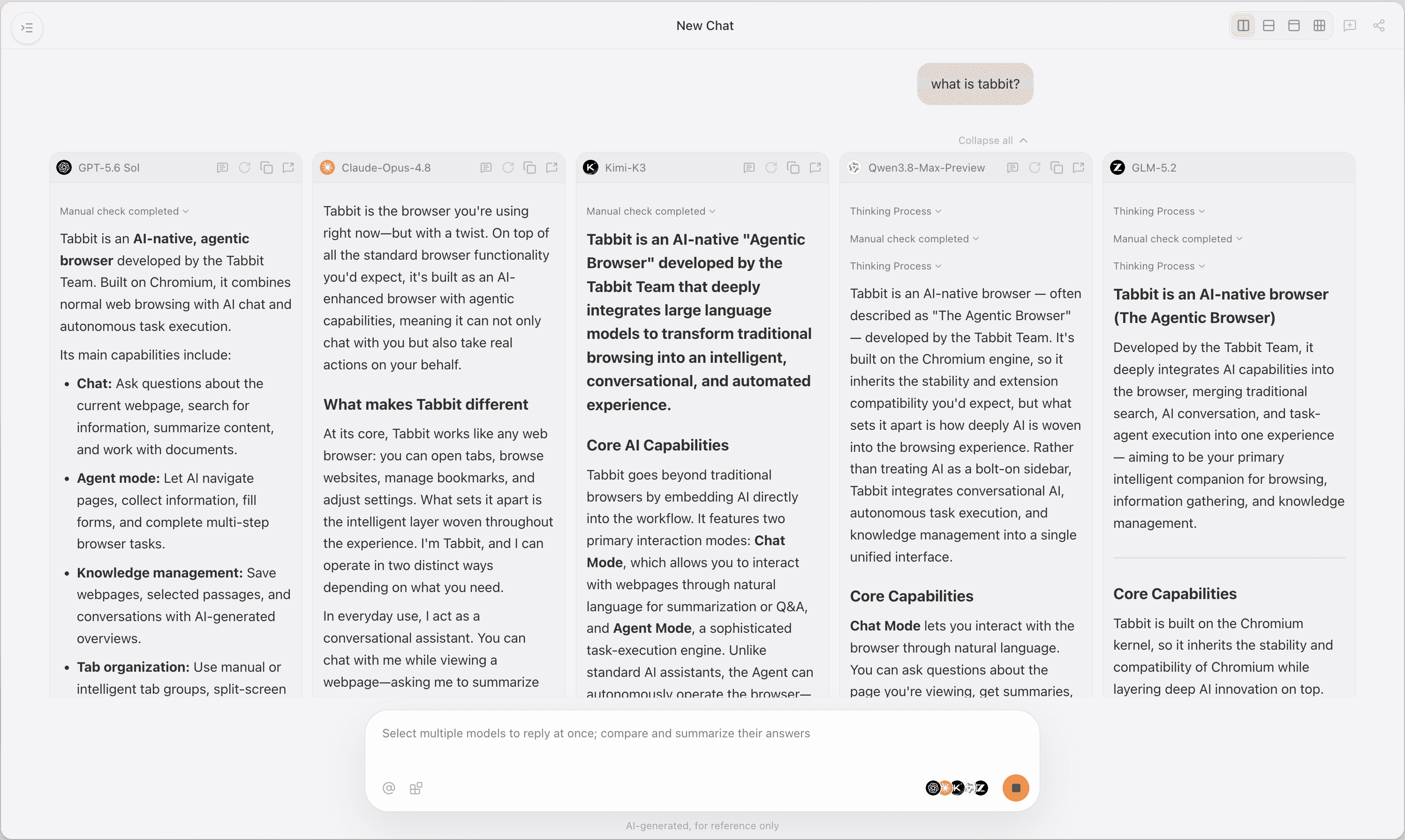
Switch models for fast scanning, careful comparison or long synthesis before you run the task.
Turn a successful research protocol into a reusable Skill for the next market scan or literature review.
TOOL SELECTION RUBRIC
| Factor | Question | Good signal |
|---|---|---|
| Scope control | Can I review and edit the plan? | A visible, editable protocol before execution. |
| Source quality | Can I set boundaries and inspect pages? | Primary-source rules plus live context. |
| Method fit | Does it support comparison and synthesis? | More than one search-and-summary recipe. |
| Output fit | Can I shape the final deliverable? | Briefs, matrices, maps and memos—not one generic answer. |
| Repeatability | Can I run the workflow again? | Saved skills, workspaces and an archive of source context. |
FAQ
It is an AI system that can plan a multi-step investigation, browse or read many sources, compare findings and produce a structured output. The useful distinction is whether you can control the scope, sources and deliverable—not simply whether it generates a long answer.
The best tool depends on the job. Look for editable planning, source controls, a method that matches your question, a useful output format and a way to repeat the workflow. Tabbit brings those choices into a browser with live tabs and model selection.
Yes. Start with a synthesis or scan protocol, set a date and source boundary, then ask for themes, methods, disagreements and gaps. Keep the original papers open so you can verify important claims.
Tabbit is free to download on macOS and Windows. Availability and model limits can vary by region, so check the current product experience when you start a task.
Download Tabbit, choose a method and start with a plan you can inspect before the first search runs.